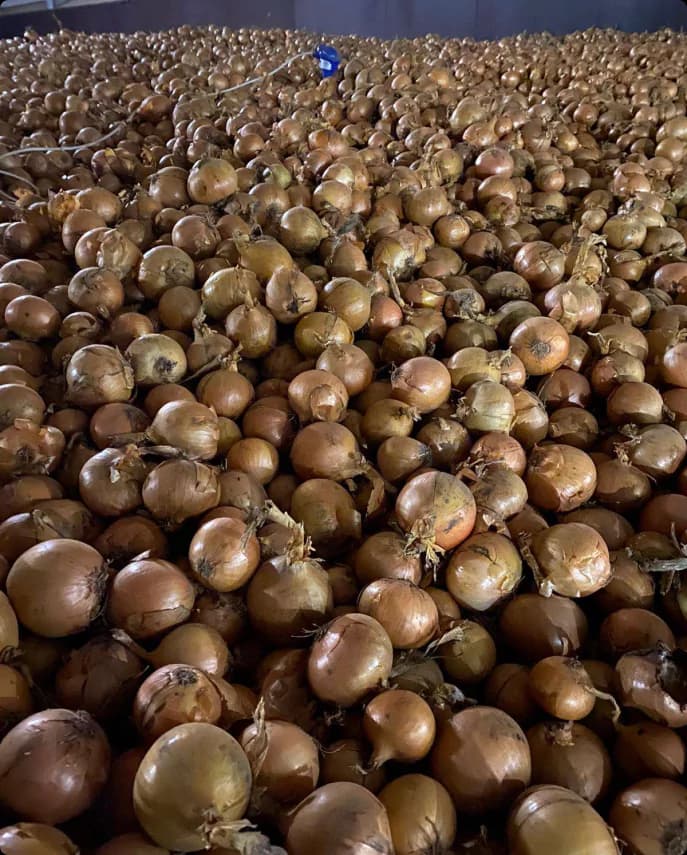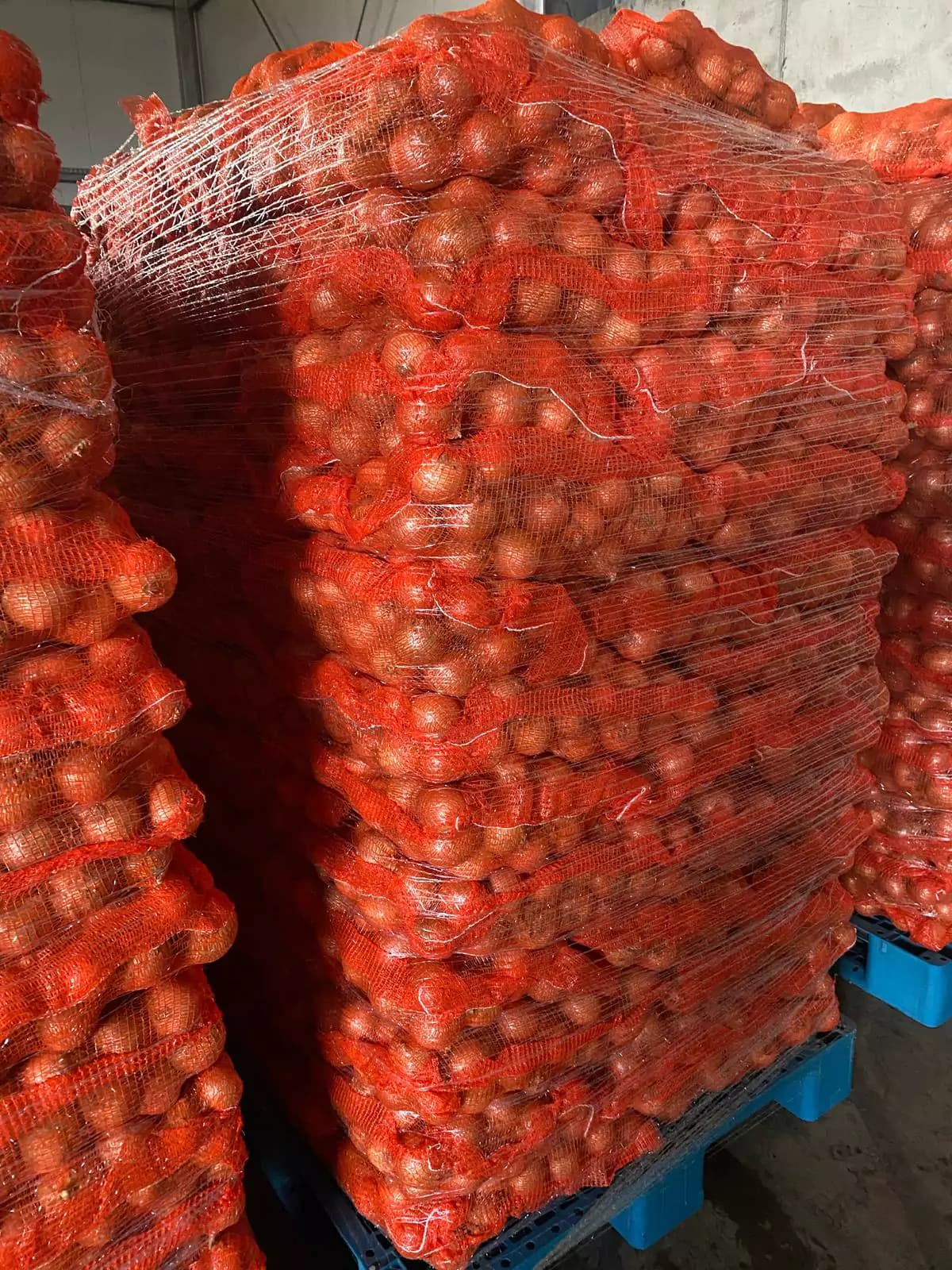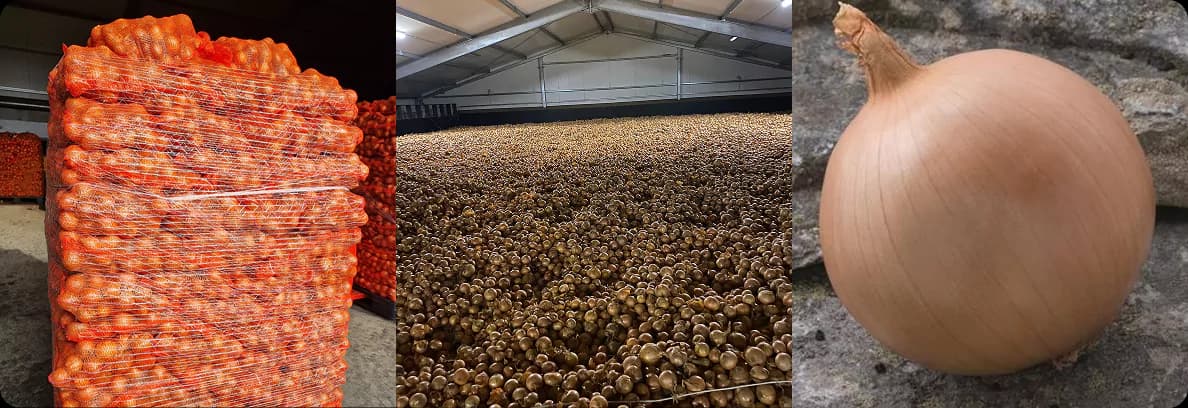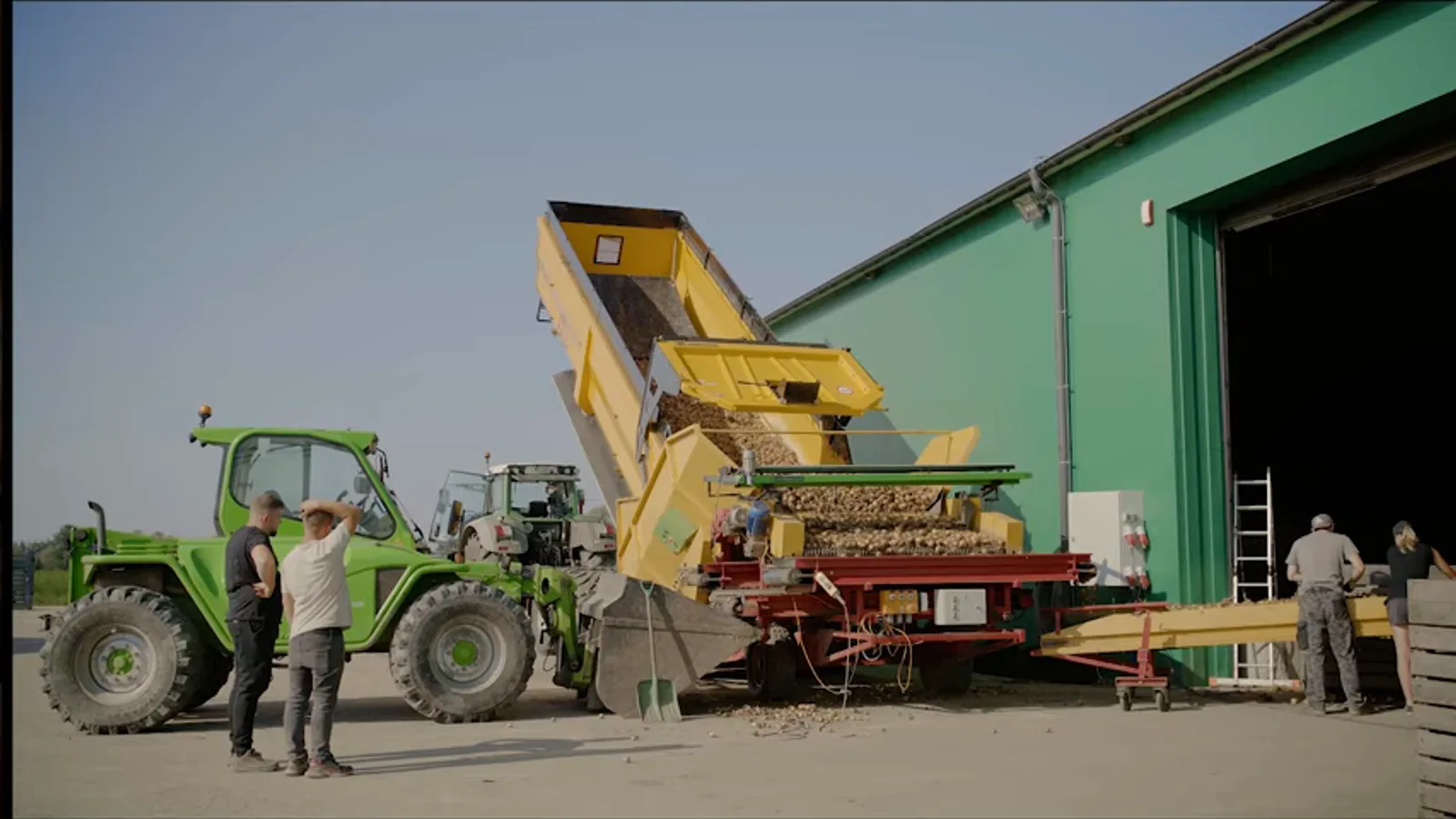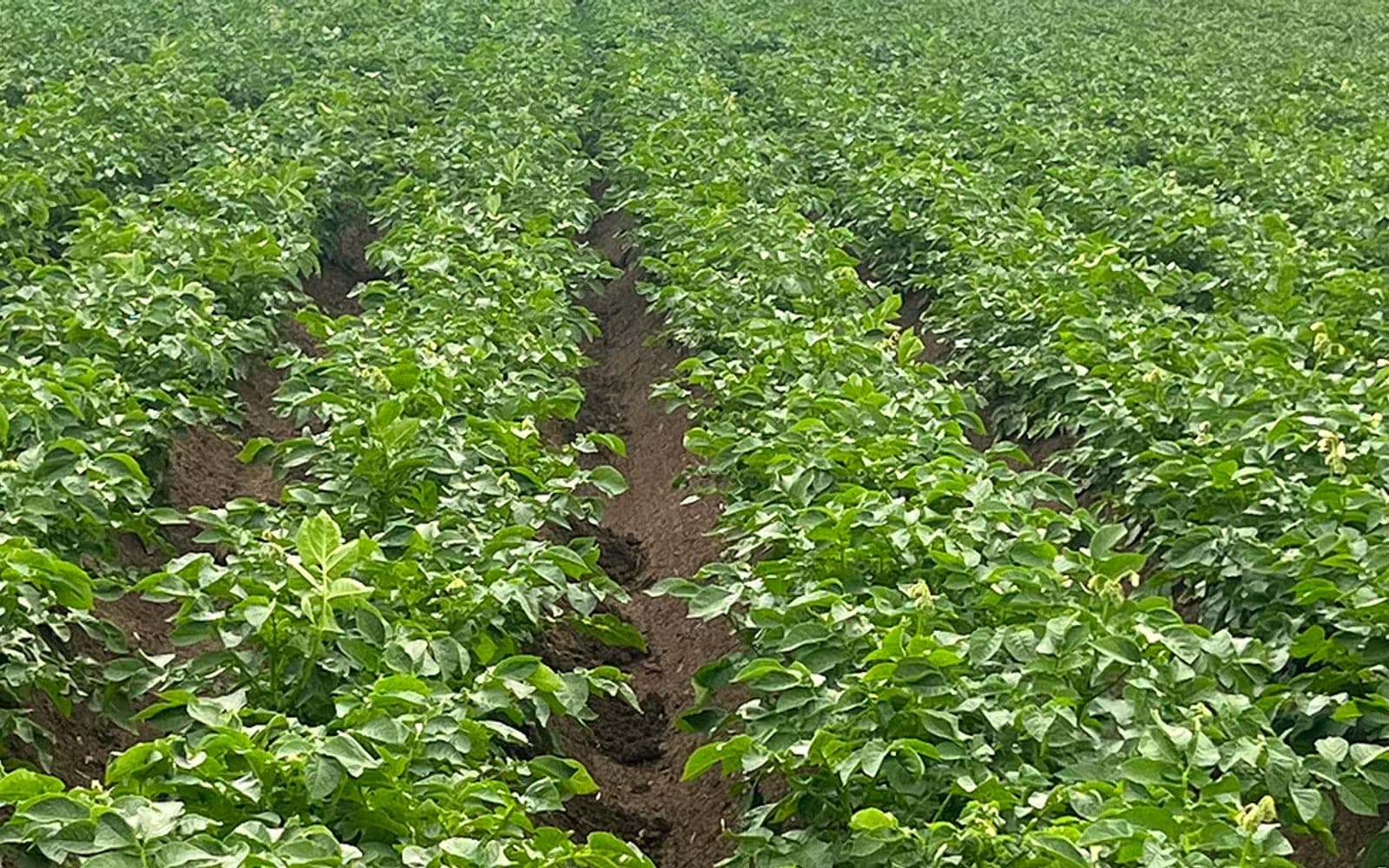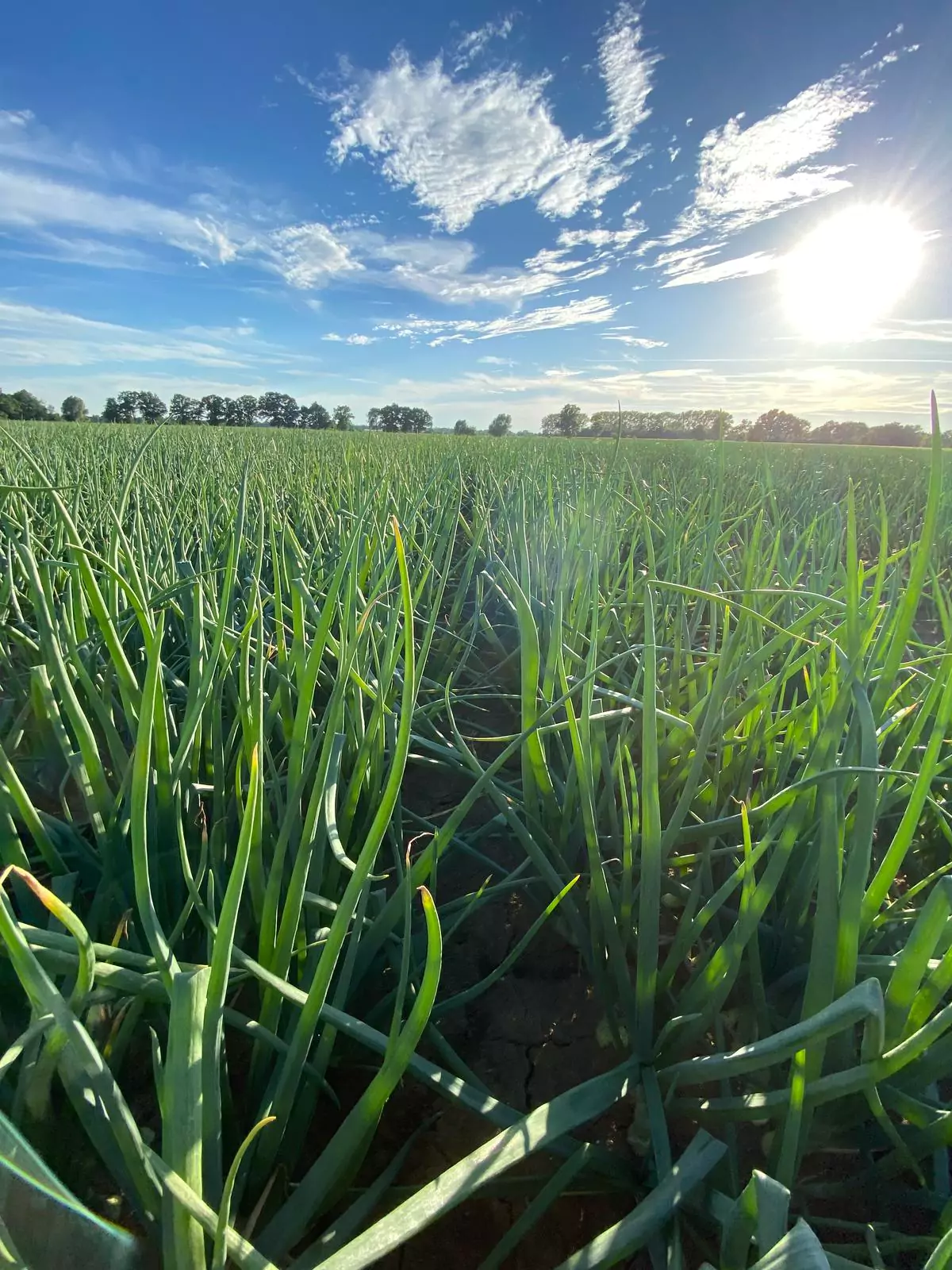
Buyers ask more and more often not only about size and price, but about how the onions were protected. Three approaches meet on the market: organic growing, conventional growing, and the residue-free technology we work in. We compare all three and explain why, for most packing houses and processing plants, residue-free produce is the most sensible choice today.
Three approaches on one table
Each of these approaches answers different needs and has different limits. The shortest way to set them side by side:
| Criterion | Organic | Residue-free (ours) | Conventional |
|---|---|---|---|
| Crop protection | only products approved for organic | the full toolkit, but run so the harvest carries no residues | standard protection programmes |
| Residues in the produce | none by definition of the method | below the limit of quantification, confirmed by batch testing | allowed within legal limits |
| Yield and volume stability | lower and less predictable | full yield, around 60 t/ha here | full yield |
| Availability of large batches | limited | yes, around 250 ha of onions here | yes |
| Price for the buyer | highest | market level | market level |
In short: organic gives purity of method, but at the cost of volume and price. Conventional gives volume, but the buyer has to trust the limits. Residue-free technology joins the two: full production scale and produce with test results below the limit of quantification.
What separates "residue-free" from "pesticide-free"
These two terms are often confused, and the difference is fundamental. "Pesticide-free" means no crop protection products were used at all, which is how organic growing works. "Residue-free" means protection was carried out, but chosen and timed so that in the harvested produce the laboratory does not quantify any residues of active substances, because the results are below the limit of quantification.
For every substance the law sets a maximum residue level, the MRL. Conventional produce can come close to those limits and still be legal. We set the bar higher: the goal is not to fit within the limit, but a result below the limit of quantification, the lowest concentration a laboratory can reliably measure.
How we run residue-free technology on around 250 hectares
This cannot be done with one decision, it is the sum of many elements run through the whole season. We produce in line with the principles of Integrated Plant Production, which treats chemistry as a last resort, not a routine: first crop rotation, field walking and damage thresholds, only then a treatment.
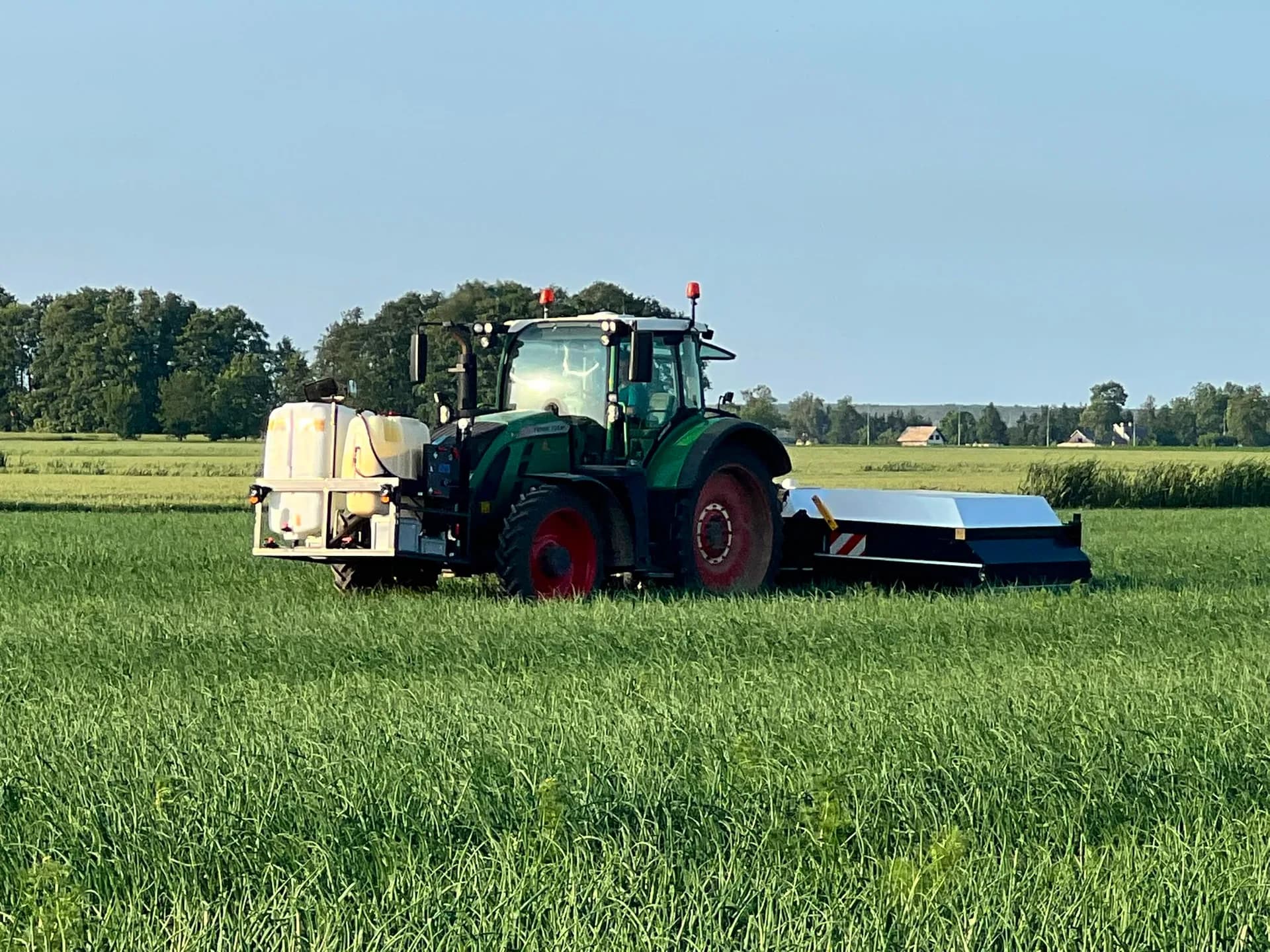
The biggest leap here came from Ecorobotix ARA spot spraying. The machine recognises single weeds with cameras on a 6 by 6 centimetre grid and hits only them, so our product use drops by around 70 percent. The spray targets the weeds, not the onions. On top of that come split, low rates, pre-harvest intervals kept with a margin, and a choice of substances that break down long before harvest.
At the end comes control. We check every batch with pesticide residue testing, plus tests for heavy metals and substances harmful to health. Without a laboratory result, a "residue-free" declaration would be only a promise.
"Residue-free" here is a test result, not a marketing line. We confirm a result below the limit of quantification with a document the buyer can show their own customers and auditors.
Who residue free is enough for, and who needs organic
Organic growing has its market and its buyers, above all in the premium segment, where the end customer pays for the organic certificate. If a chain is building a separate organic shelf, it needs certified organic produce and there is no way around that.
Most of the market looks different, though. Packing houses, processing plants and chains need large, repeatable volumes at a market price, and on the food safety side one thing interests them: clean test results and a complete set of documents. That is exactly what residue-free technology delivers. The buyer gets produce with the purity consumers ask about, without the volume limits and the price premium that organic brings.
That is why, with around 250 hectares of onions, we did not switch to organic growing: our buyers need full trucks all year round, and with organic yields that is hard to guarantee. Instead, we brought the conventional toolkit to a level where test results are below the limit of quantification.
How to check this with a supplier
Whatever the seller declares, it is worth asking for three things: current laboratory results for the batch, the farm's certificates, and a description of the protection technology. A wholesale onion supplier should have these documents in the drawer, not produce them on request.
With us, the test results for every batch and our GlobalG.A.P., GRASP, FSA Gold and GMP+ certificates are open for inspection. You will find sizes, packaging and available varieties in our onion offer, and for the specification and a quote on a particular batch the simplest way is to write through the contact form.