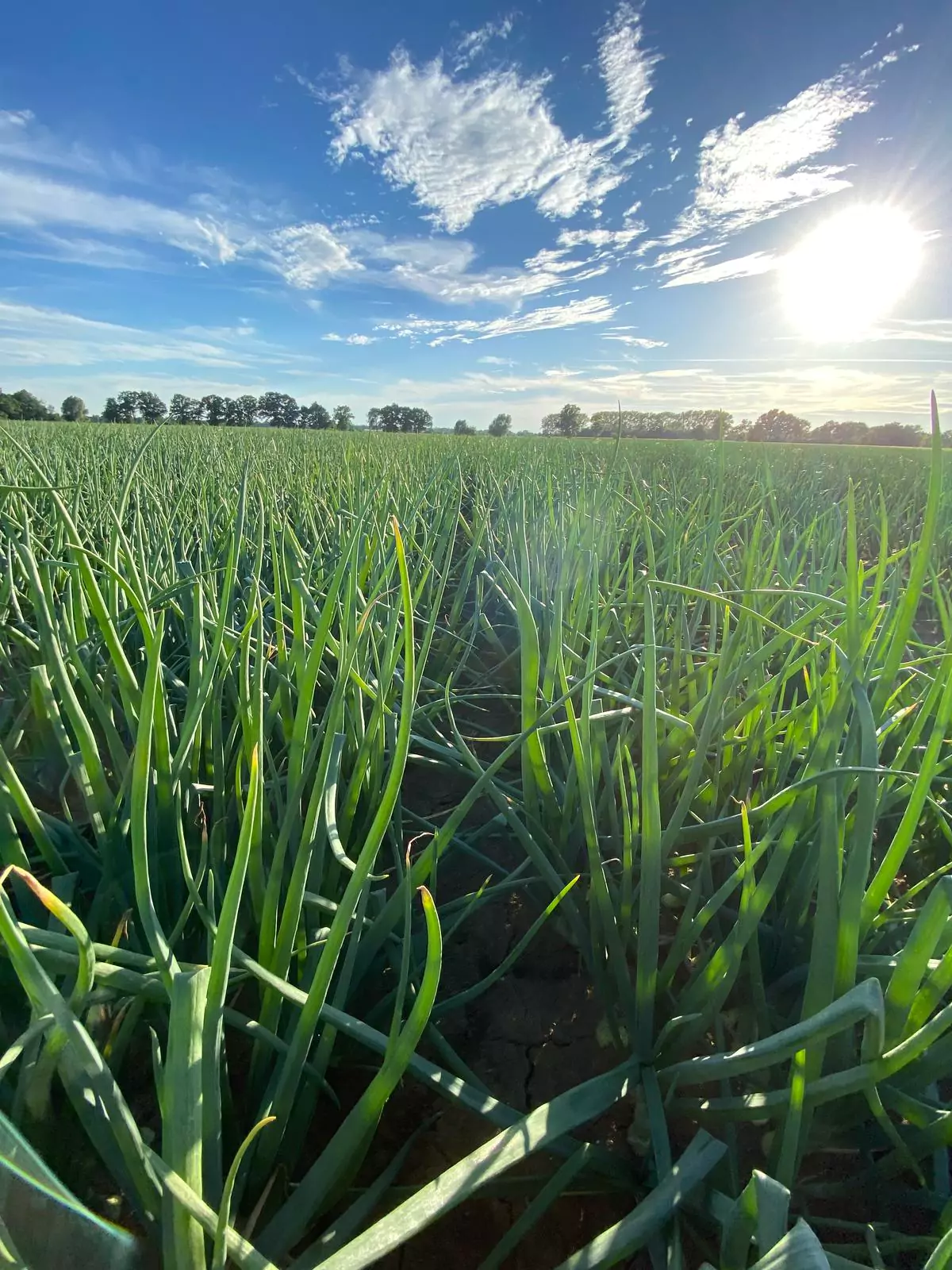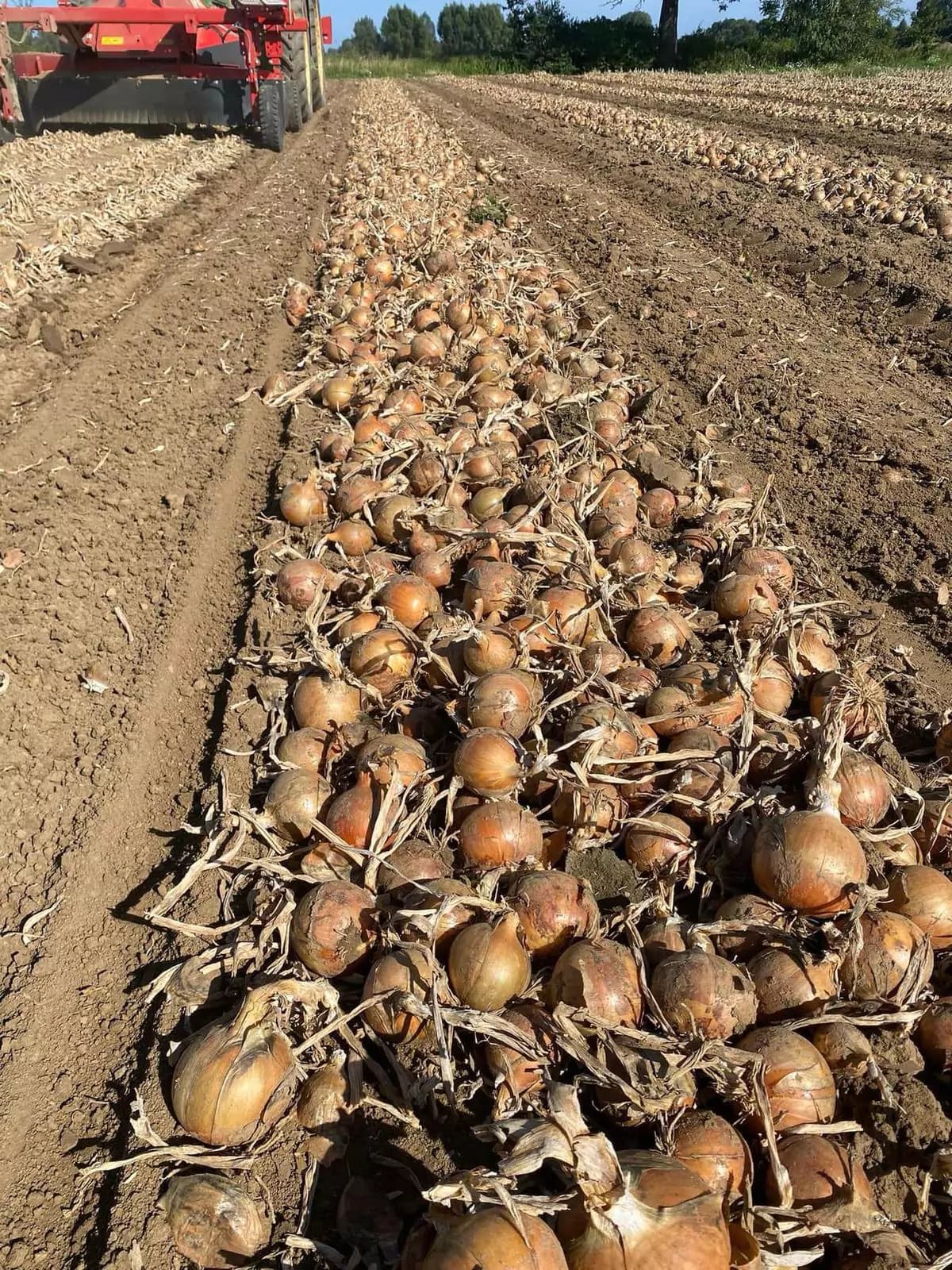
Most losses in the store begin a few weeks earlier, in the field. A bruise, a scuffed skin or a crack is an open gate for fungi and bacteria, and you only see it after weeks of storage. We harvest vegetables from around 400 hectares, so every unnecessary centimetre of drop and every conveyor turning too fast translates straight into tonnes of produce. In this post we show what really decides the number of injuries.
Why bruising is the buyer's problem, not only ours
A damaged vegetable looks perfectly normal on the day of harvest. An internal bruise does not break the skin, so the batch passes intake without objection, and the dark patch under the skin only appears a few days later. In the store such pieces rot first and take their neighbours with them, which is why mechanical damage is one of the main causes of the losses we write about in our post on onion storage losses.
For a packing house or a processor that means one simple thing: a gently harvested batch lasts longer and gives less waste on the line. So for us a careful harvest is not a matter of working style, it is a quality parameter.
Four kinds of damage we look for
- Scuffed skin. Superficial, but it increases evaporation and weight loss, and in onions it means losing the dry skin.
- Bruises with the skin unbroken. The most dangerous, because they are invisible at first. A dark, bluish patch forms under the skin after a few days.
- Cuts and nicks. They happen on blades and edges, and they open the way to pathogens immediately.
- Cracks and crushing. The result of too high a drop or of pressure in a hopper filled too deep.
In onions there is one more point: a damaged neck or a torn base plate. An onion like that will not close during curing and lets rot inside.
Three things that decide the scale of the damage
The thresholds below come from trade studies on the potato harvest. We treat them as a reference point when setting up the machines, not as measured parameters of our deliveries.
| Factor | What trade practice says | Why |
|---|---|---|
| Drop height | up to around 15 centimetres onto hard machine parts, up to 25-30 centimetres onto a layer of produce | the force of the impact grows with height, and the landing surface decides: a vegetable bruises hardest on steel |
| Produce temperature | harvest when the vegetable is neither chilled nor overheated | below 10°C the tuber tissue loses its elasticity and cracks instead of giving way, and an overheated, dehydrated tuber takes knocks worse |
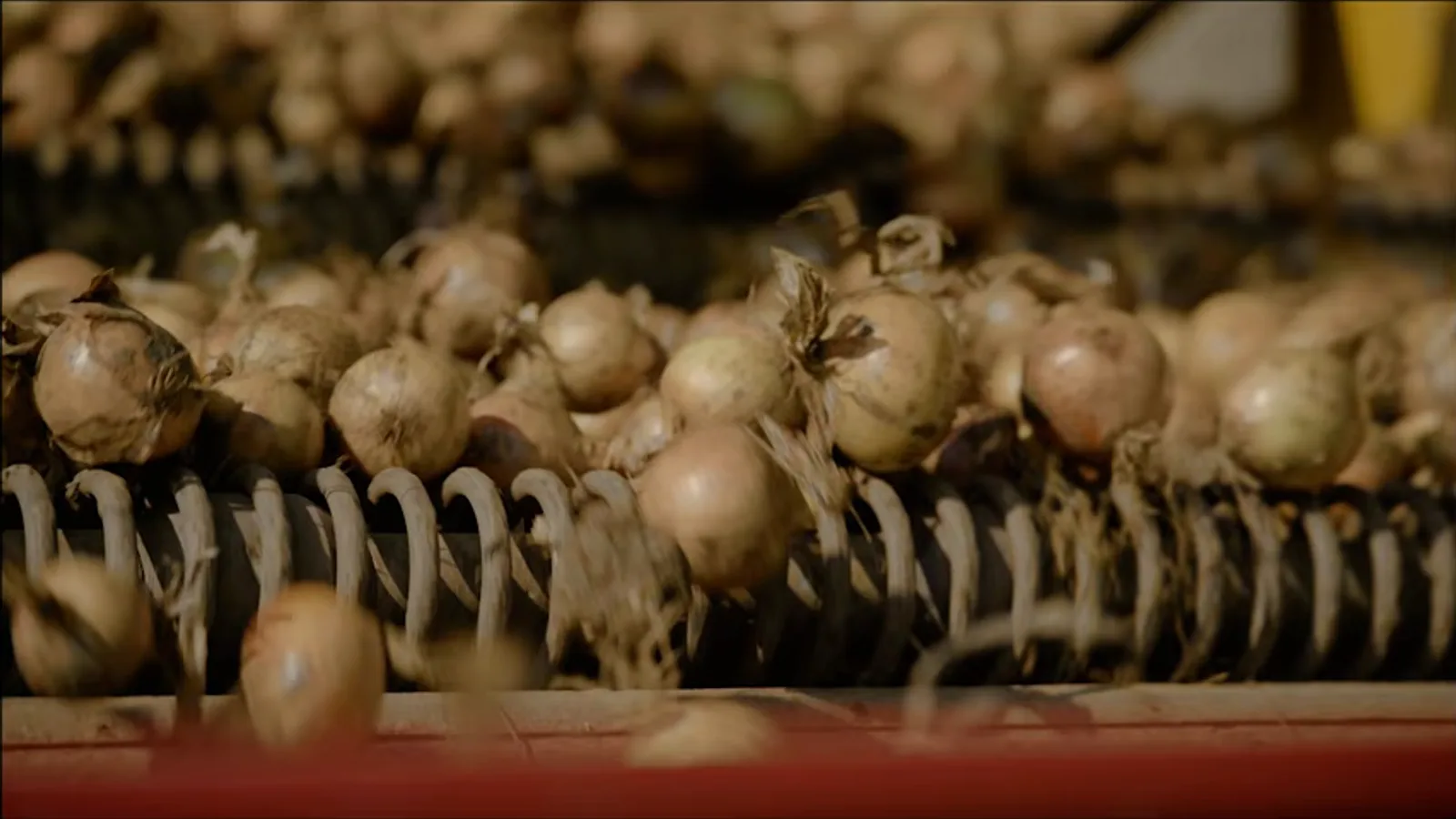
| Speed and fill | belts 70-85 percent full, speed set so the sieving web stays covered | a vegetable bruises less on a vegetable than on steel, and an empty belt lets single pieces build up speed |
The last row surprises people most often. Driving too slowly can raise the number of injuries instead of cutting it, because the material on the sieving web is thin and the shaking then acts directly on single pieces. The machine should work with a full table, not carefully and empty.
How we set up the machines
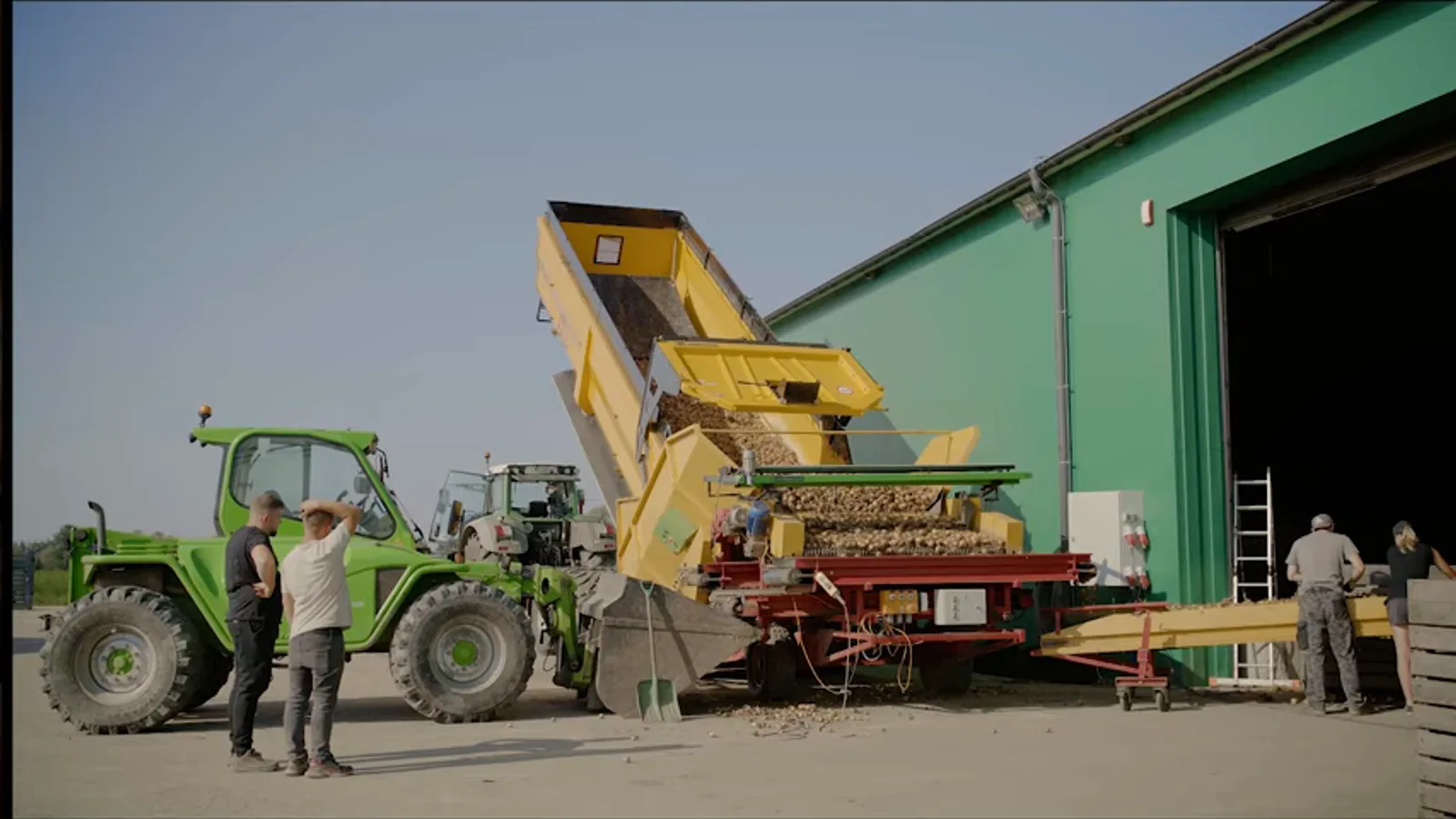
We run the harvest so the vegetables fall as seldom and from as low as possible. In potatoes we work with the self-propelled AVR Puma 3 harvester with an 8 tonne hopper, and we describe that work in detail in our post on the AVR Puma 3 potato harvester. Unloading on the move gives us output, because the trailer runs alongside and the harvester does not stop, but the transfer itself is always the highest drop in the whole chain, so it needs separate attention.
- We keep the belt low over the load and raise it only as the trailer fills, instead of pouring from full height into an empty body.
- We fill, we do not dump. The first layer should fall the shortest possible distance, and the next ones land on vegetables.
- We adjust the transfer points between the belts so the difference in height is minimal, and we lower the filling conveyor as the hopper fills, so the produce settles in layers.
- We watch the rubber covers on the webs, the edges and the transfer points. Worn rubber means metal in the path of a tuber.
- We pick the moment of harvest. We lift after full maturity, at the right soil moisture, and at night we work only as long as the produce holds the warmth of the day: what decides the susceptibility is the temperature of the produce itself, and that falls much more slowly than the air temperature. We describe when we lift potatoes for fries in a separate post on the potato harvest date.
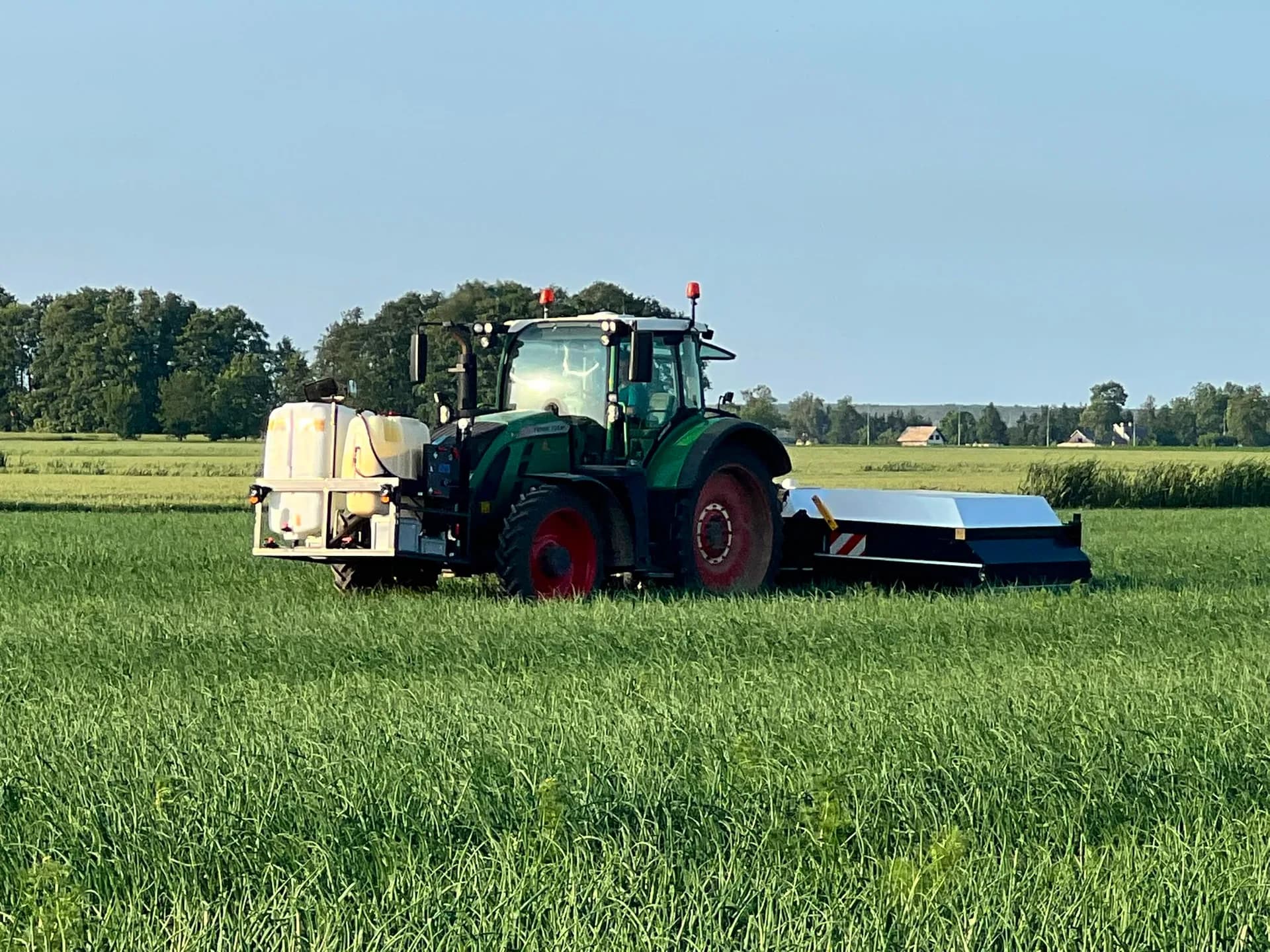
In onions we solve the same problem differently, because the harvest is two-stage. First the Grimme WV 180 windrower undercuts the plants and lays them into windrows, where the onions fall a short distance onto the soil and onto the plants already laid down. Once the onions have dried in the windrow, depending on the weather, the same AVR Puma 3 picks the windrows up, and by then the produce lands on a layer of dry leaves and on other onions. We have gathered all the machines we do this with in our machinery fleet.
Sorting does not repair bruises
An optical sorter will reject a stone, a clod of soil and a piece with a visible defect, and it does so at up to 100 tonnes per hour. What it will not see is an internal bruise that is still developing. How that check works we describe in our post on the DOWNS CropVision optical sorter.
That is why there is only one order: gentle harvest first, sorting second. The checking machine is a sieve, not a repair.
How to check the machine settings
You cannot judge the damage by eye on the day of harvest, so it is checked with a sample test. The principle is simple: you take a sample straight off the machine, keep it warm for a few days so the discolouration has time to come out, then peel the pieces and count the ones with patches under the skin. Without peeling you see nothing, because an internal bruise does not break the skin.
To know which part of the machine does the harm, samples have to be taken after each stage: behind the sieving web, before the hopper and after the transfer. A single sample at the end of the chain will only say how much damage there is, not where it happened.
In the trade literature, 10 percent of damaged tubers in such a test is taken as the warning level for machine harvesting of potatoes. That is a diagnostic figure, for judging how the machines are set, not a delivery parameter: we always agree the quality parameters of a batch in the specification with the buyer.
What we do right after harvest
A freshly harvested vegetable can still heal small wounds, but only in the right conditions. In onions that is done by curing for 2-4 days with warm air, which closes the neck and dries the scuffs. We describe it in our post on curing onions before storage.
What the buyer gets out of it
Less damage means a batch that lasts longer, less waste on the buyer's line and fewer complaints after a few weeks of storage. So we control not only the result at the end of the line, but the way the machines work as well.
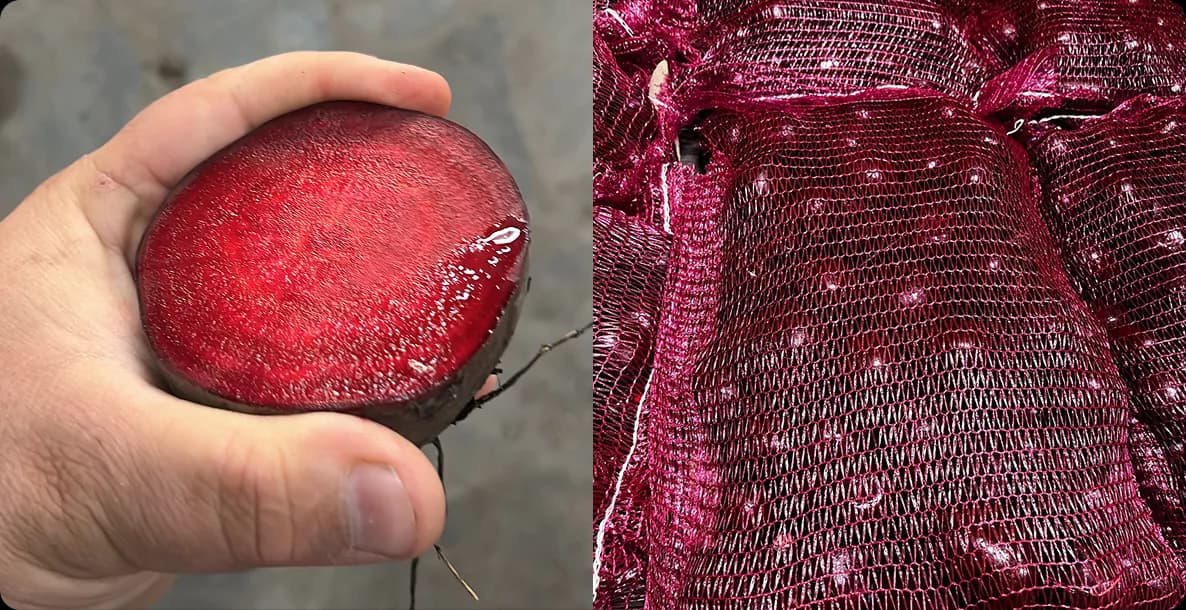
We deliver potatoes, onions and beetroot in a form matched to the buyer's line, and we have gathered the full specifications in our offer. For a quote for the season, write to us.