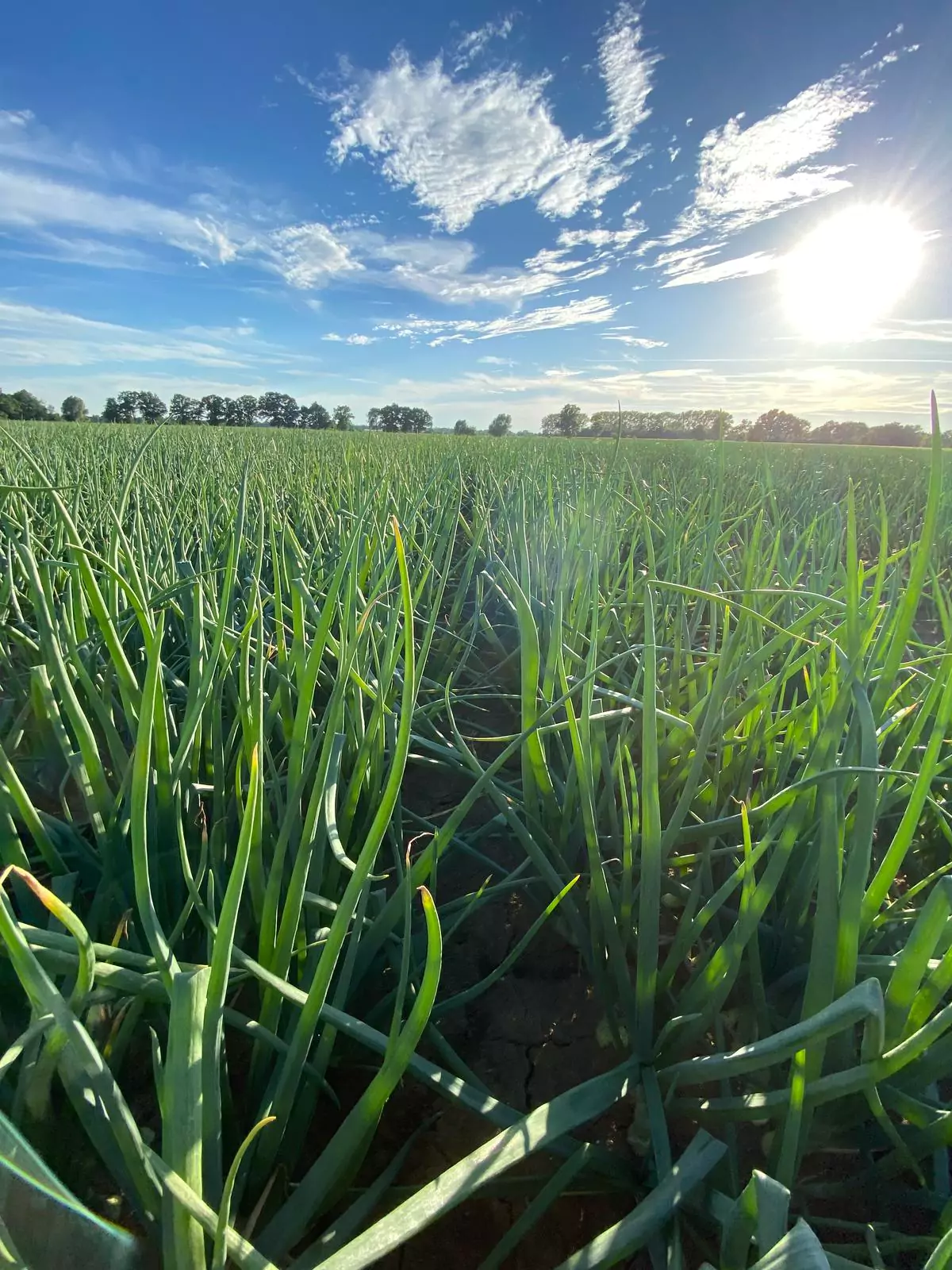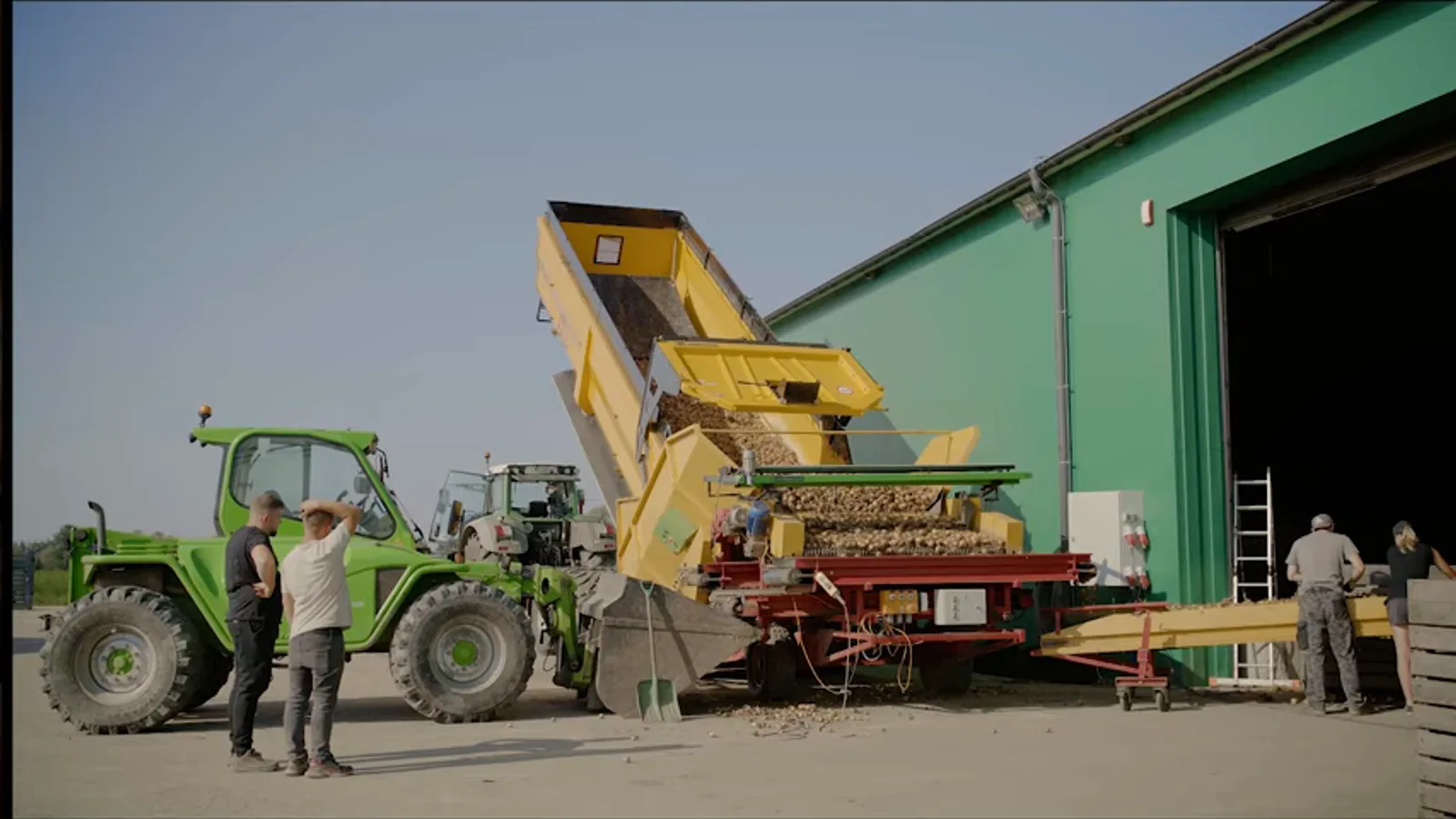
We prepare the store while it is empty, that is before the first trailer leaves the field. Before the 2026 harvest we closed this stage as we do every year: before the trailers started rolling, the 13 000 tonne store was cleared, washed and disinfected, its ventilation checked and the plan for filling the chambers ready. The first jobs start as early as August, which we wrote about in our post on August before the onion harvest. Below we show what this annual inspection looks like step by step.
Why we do the preparation before harvest
At the peak of harvest there is no time for repairs. Onions come off the field in batches, the harvester runs, the trailers go round, and the store has one job: to take the produce in. A fan fault or a blocked duct then means either a standstill in the field or, worse, taking a batch into a chamber that cannot cure it.
So we close the whole inspection before the harvest starts. We keep to a simple rule: the store has to be ready a day earlier than the field.
Cleaning, because an empty chamber is the best opportunity
Leftovers from the previous season are the shortest road to trouble. Spores of the fungi that cause rots stay in the skins, the dust and the clods of soil, and storage pests overwinter in the corners. We clean each chamber thoroughly while it stands empty, and we close out the whole store before the first trailer of the main harvest.
- We carry everything out, including onion leftovers, skins and the waste from under the line.
- We sweep and wash the floors, walls, ventilation ducts, intake hoppers and belts.
- We disinfect the surfaces after washing, classically with limewash or with a cleaning and disinfecting product approved for contact with food.
- We dry the building and only close the chambers once it is dry. Moisture left inside a closed store works against us.
The most common mistake is filling a chamber that still holds last year's skins and dust. Healthy onions then land on a ready-made source of infection, and you only see it months later, when checking the batch.
Ventilation and controls, the heart of the store
Onions in a store do not lie idle: they breathe and give off heat and water. Without working ventilation the pile heats up from the inside. The most air is needed at the start, during curing: with the two-phase harvest we run (the onions first dry in windrows in the field), storage practice puts the airflow at around 120-150 cubic metres per hour for every cubic metre of onions, and with a single-phase harvest at around 200-210. A fan that cannot deliver that flow can no longer be replaced at the peak of harvest.
| Area | What we check | Why it matters |
|---|---|---|
| Fans and ducts | output, clear passage, tightness of the flaps | even airflow through the whole pile |
| Temperature and humidity sensors | readings and where they sit in the chamber | the controls only work on real data |
| Automation and controls | a test run of the full cycle | no surprises with the first batch |
| Tightness of the building | doors, gates, insulation, thermal bridges | steady temperature and no condensation |
| The line and the intake hoppers | cleanliness, condition of the belts, rubber parts | less bruising and less contamination in the batch |
We treat the sensors separately, because they decide everything that follows. We check the readings and where they sit, so the controls see the real state of the pile and not just the ceiling of the chamber. The target conditions for cured onions are 0-2°C and 65-75 percent relative humidity, and how we get there we describe in our post on what temperature onions should be stored at.
The filling plan, before the first trailer arrives
A store is not one big sack. We lay the batches out in it so that we can steer them through the whole selling season.
- Variety and purpose. Varieties with a shorter dormancy go out earlier, and the ones meant to lie long go to the back of the queue. Which varieties those are, we describe in our post on which onion varieties store best.
- Batches kept apart. Every batch has its own place and its own description, so at a quality check or a complaint we know which field it came from.
- Order of release. The chambers closest to the packing line take the produce that goes out fastest.
- Spare space. We leave a reserve, because in a wet year some batches need longer curing or separate handling.
Two different things: curing and long storage
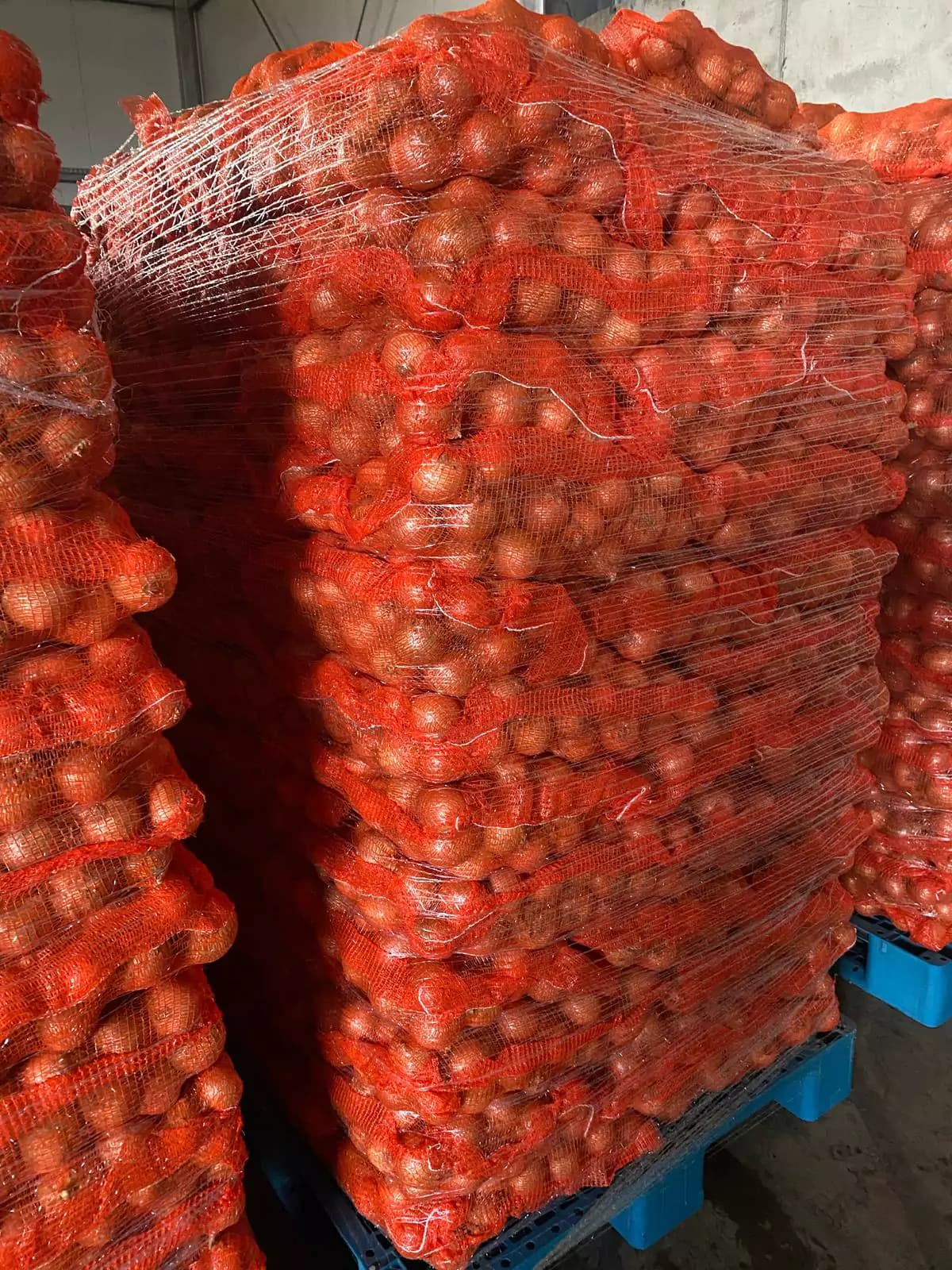
It is worth separating the two stages, because they get mixed up most often. Onions go from the field straight to the storage facility, but not straight into proper storage. They first go into chambers where we cure them with a flow of warm, dry air for 2-4 days, until the neck dries and closes. We describe it in detail in our post on curing onions before storage.
Only then does the batch come down in temperature and go into long storage. We do not let bruised or under-cured onions into that stage, nor onions from infected patches. One batch like that can break down the pile next to it, and the losses are then counted in tonnes, not in kilograms. Where the losses come from and how we keep them down, we explain in our post on onion storage losses.
What this gives the buyer
A well-prepared store gives the buyer two concrete things: steady quality through the whole season and deliveries when they are needed, not only at the peak of harvest. Over a season our store takes onions from around 250 hectares, in batches, because some of the produce goes to buyers straight after curing and the rest waits its turn. What that decision looks like from the commercial side, we describe in our post on how we manage onion sales with our storage facility.
You will find the varieties, size grades and packing formats in our onion offer. For a delivery schedule for the season, write to us.