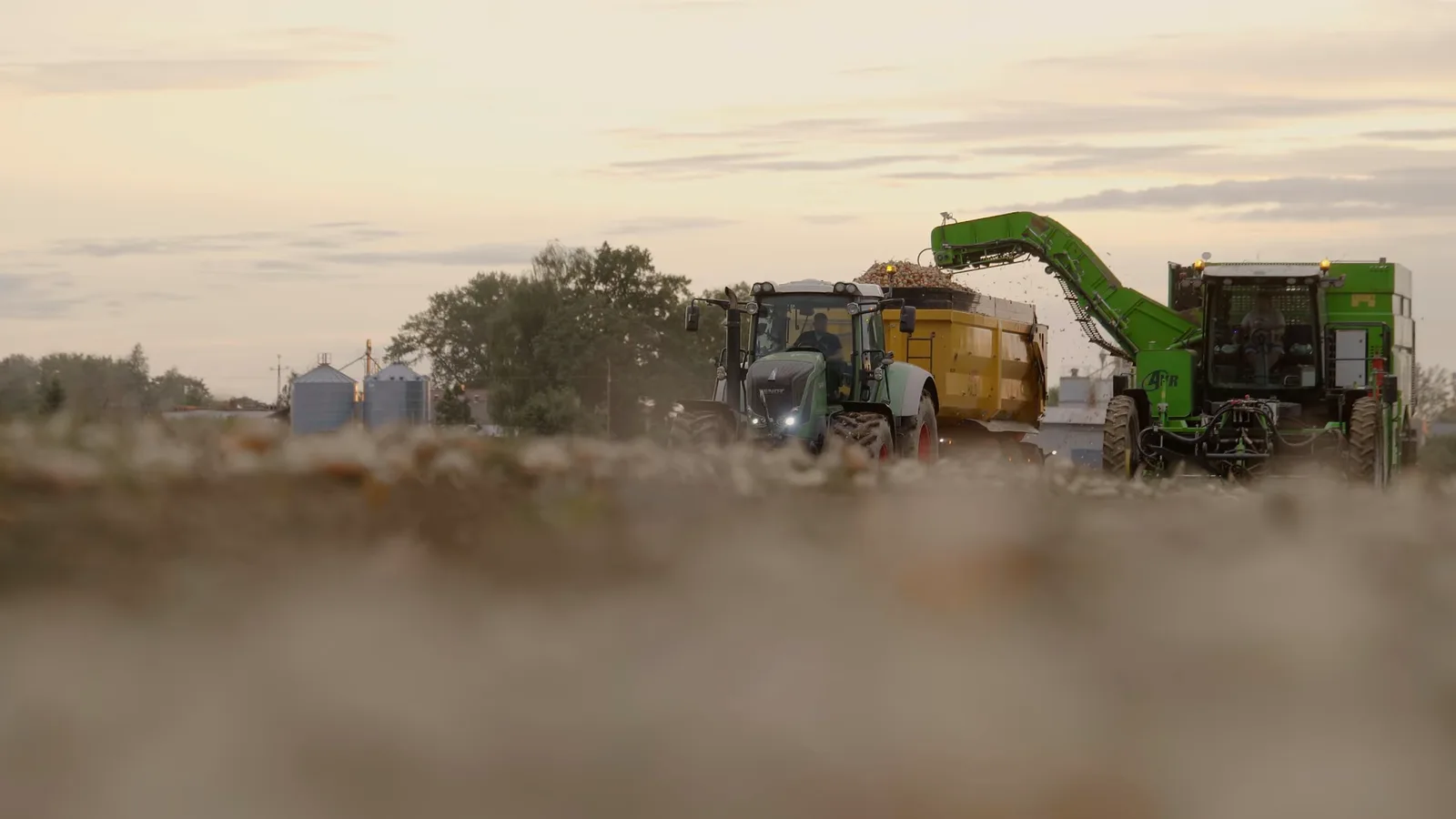
We harvest beetroot from the end of September through October, always before the first hard frosts. We set the date against three things at once: the size grade of the root, the buyer's order and the weather, because those decide whether a batch is fit for processing or for the fresh market. Beetroot is one of the 8 items in our offer and we run it in the same rhythm as onions, that is for a specific buyer.
When we harvest beetroot
The harvest date is always a compromise. Every extra week in the field means a bigger root and a higher yield, but also the risk of oversizing, cracking and frost. So we plan the harvest from several signals at once.
| Signal | What we do about it |
|---|---|
| The root has reached the target size grade | we set the date, because further growth spoils the evenness of the batch |
| A forecast of hard frosts | we bring the harvest forward, a frozen root loses its market value |
| An order for the fresh market | we lift in batches, so the produce goes straight from field to line |
| Rain and a soaked field | we wait, because a wet harvest means bruising and soil contamination |
The beetroot harvest falls in the same window as the potato lifting, so we plan the order of the fields well ahead. The batches agreed for immediate delivery come off first, and the ones meant to lie longer come last.
Why frost is the limit
Of the autumn vegetables, beetroot is one of the more frost-sensitive. A frozen root turns glassy and soft once it thaws, and inside it starts to break down, which you cannot see from the outside straight away. A batch like that can pass the intake check without objections and only spoil in the warehouse, which is why the whole industry watches the harvest date so closely.
In the store, stability is what counts. Beetroot copes badly with swings in temperature and with freezing, so we make sure the conditions in the warehouse stay even for the whole time it lies there, with no jumps that weaken the root.
Beetroot hit by frost cannot be rescued by sorting. So when a sharp drop in temperature is forecast, we drop the other jobs and lift, even if the root would still put on a little weight.
Extract and colour, or what the processor checks
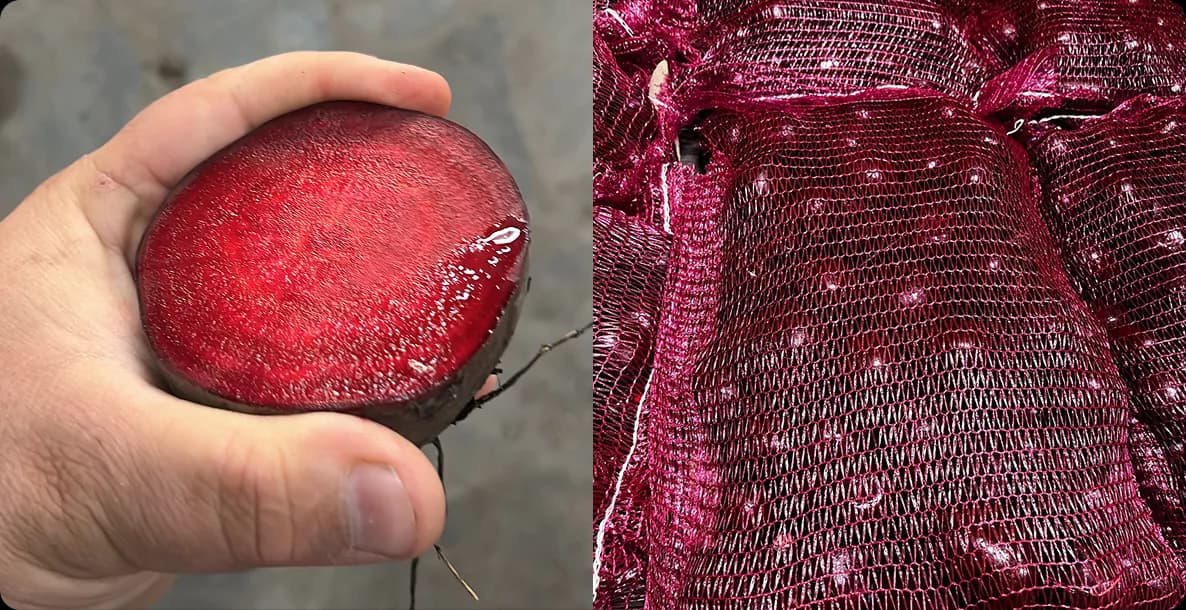
A processor does not look at the yield, but at what is left after processing. Three parameters count: the extract, that is the content of dissolved solids measured in degrees Brix, in practice mainly sugars, an even flesh colour with no pale rings, and the hardness of the root. We agree the required extract level with the buyer when contracting.
That is why we pick varieties for a high extract: Wodan, Monty, Chisel and Titan. Wodan also covers both sales directions for us at once, because it combines hardness with an even, deep colour. We write about it separately in our post on Wodan beetroot.
- The extract (Brix) decides the efficiency and the taste of the product after heat treatment.
- Colour and the absence of rings translate directly into the look of the finished product.
- Hardness means fewer losses on the line and less bruising in transport.
- Size grade sets the direction of the batch: an even, medium root for processing, tighter uniformity for the fresh market.
From field to line, how we run the harvest
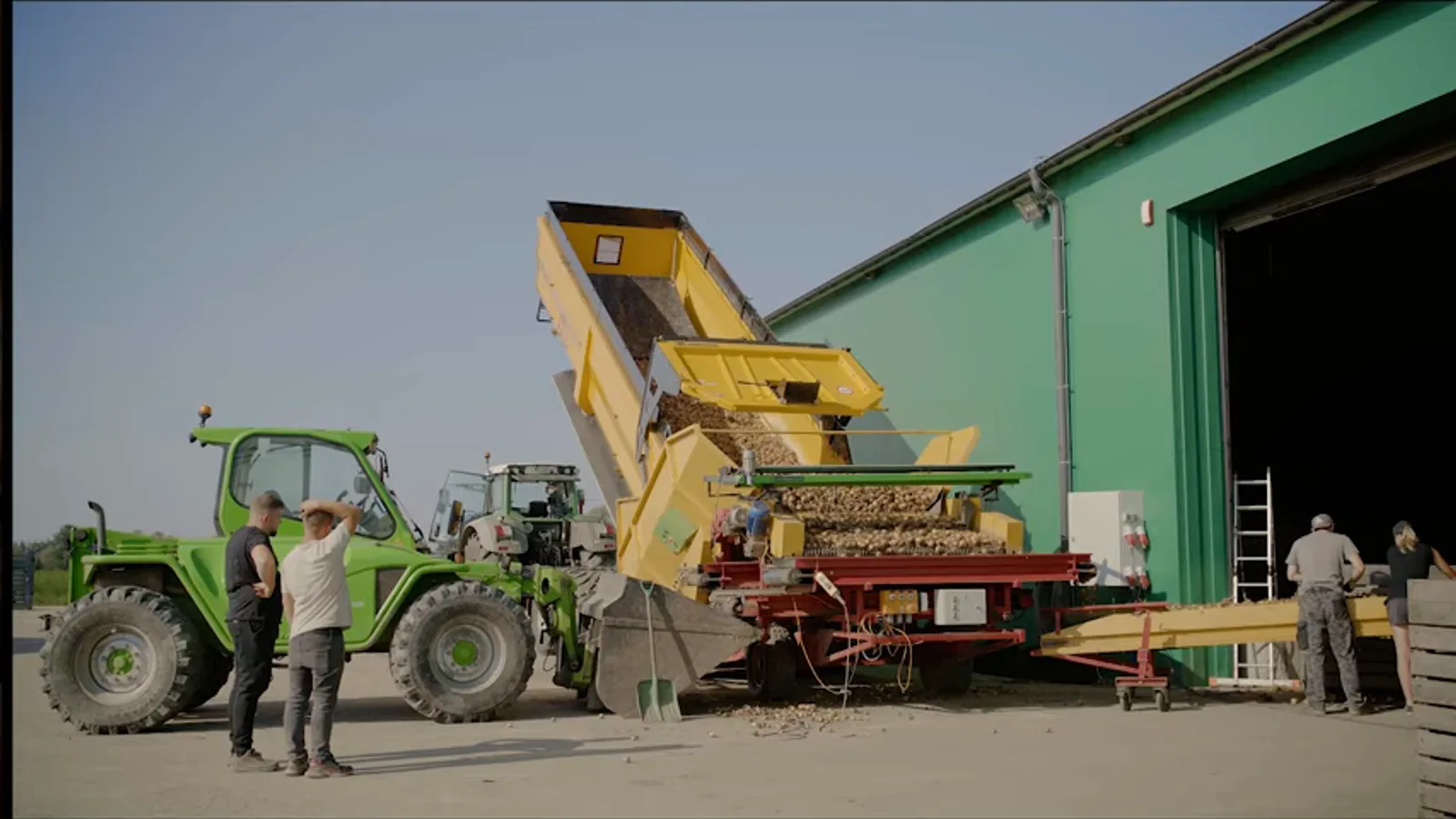
In practice the beetroot harvest is three stages: topping, that is removing the leaves just above the root, lifting and loading. Each of them can spoil the produce, because bruised or scuffed roots darken and rot faster. So we set the pace of work for the quality of the batch, not for a daily record, just as we do when harvesting onions with a harvester.
From there a batch takes one of two roads. Produce for immediate delivery goes straight onto the line: washing, size grading and a check piece by piece. The optical sorter scans the roots with cameras at up to 100 tonnes per hour and rejects stones, clods of soil and pieces with defects, and how it works we show in our post on the DOWNS CropVision optical sorter.
Produce meant to lie longer goes into the store unwashed, because a wet root rots in the warehouse. It goes through the line only before release, just before dispatch to the buyer.
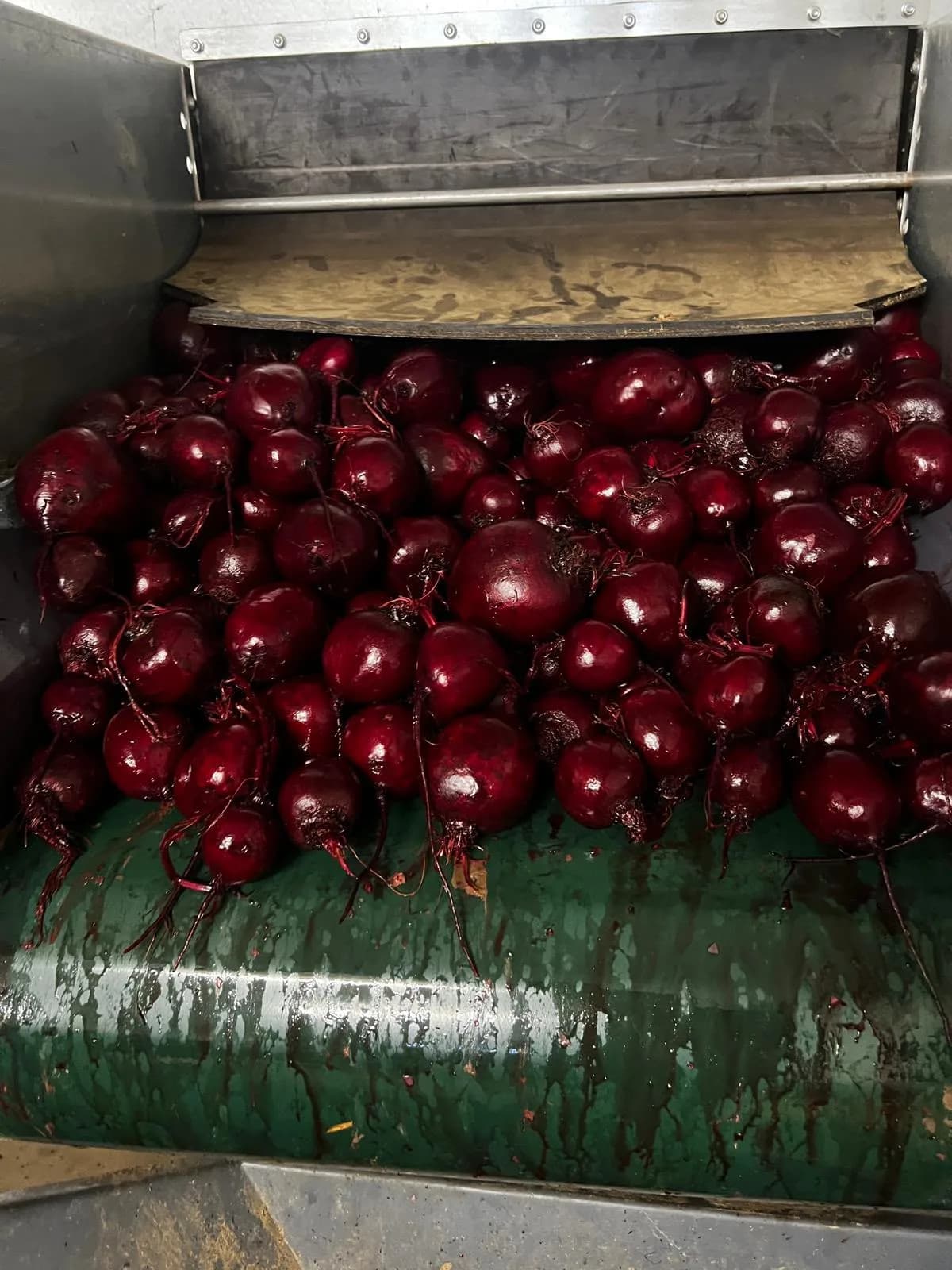
We set aside part of our own 13 000 tonne store for beetroot, which lets us spread deliveries beyond the peak of the season, when there is less fresh beetroot on the market.
What this means for processors and packing houses
A well-run harvest shows on the buyer's side: roots in the size grade ordered, an even colour and batches lifted before hard frost, so the produce does not surprise anyone in the warehouse. We test every batch for pesticide residues, heavy metals and substances hazardous to health, and we run the farm in line with GlobalG.A.P., GRASP and the principles of Integrated Plant Production.
We match the delivery format to the buyer's line: loose, big bags, 15 kg and 10 kg sacks and smaller. We have gathered the full specification in our beetroot offer. If you are planning a purchase for the season, write to us, and before a larger order we can send a free sample.