We prepare harvest machines before the season, not during it: we go through them one by one, replace the wearing parts and set them up running empty, before they ever enter a field. In season all that is left is a short check before every shift and repairs for whatever happens. The reason is simple: the vegetable harvest happens in a few short weather windows, and there is no room in them to wait a week for a part.
The harvest window is shorter than it looks
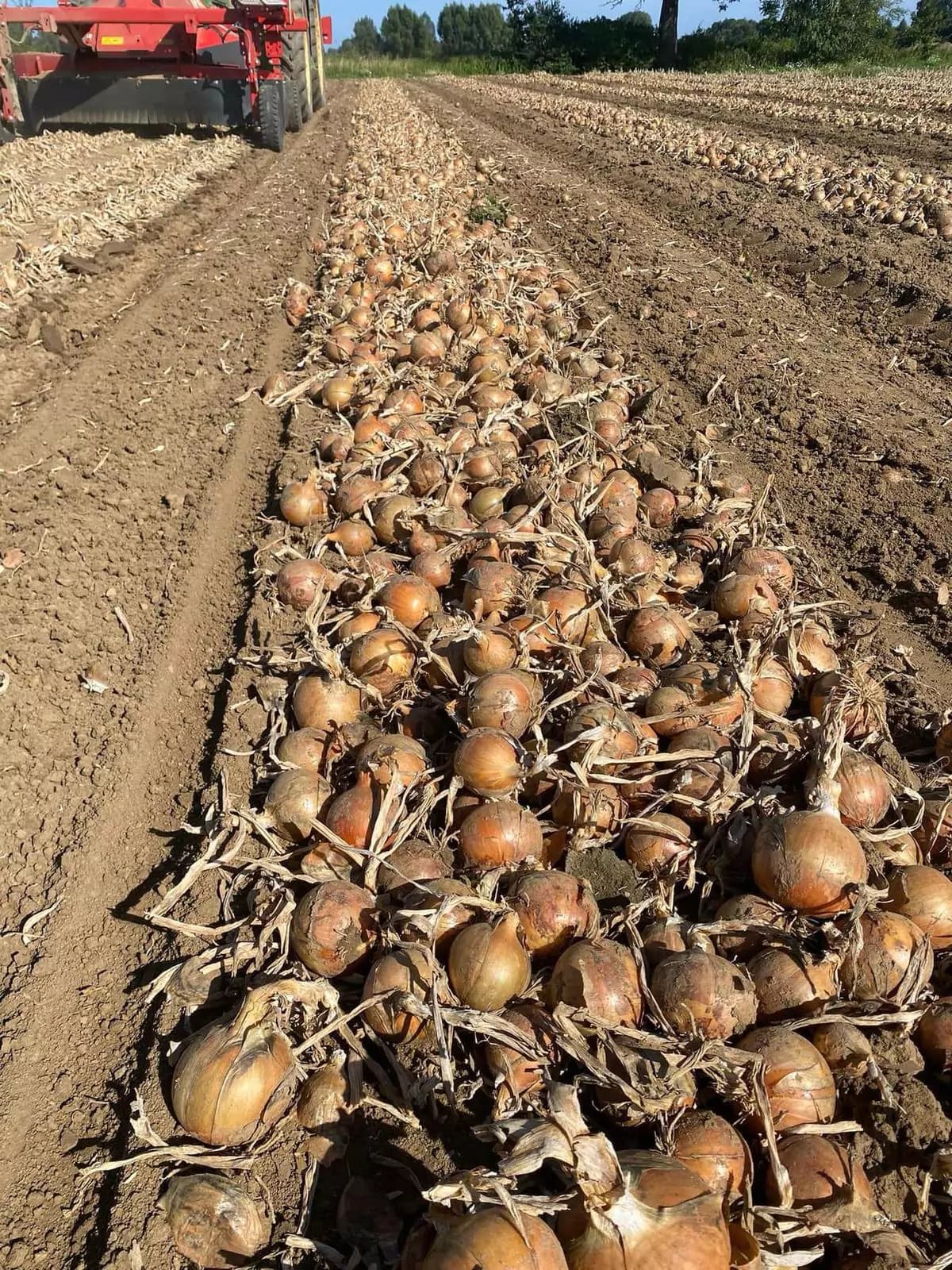
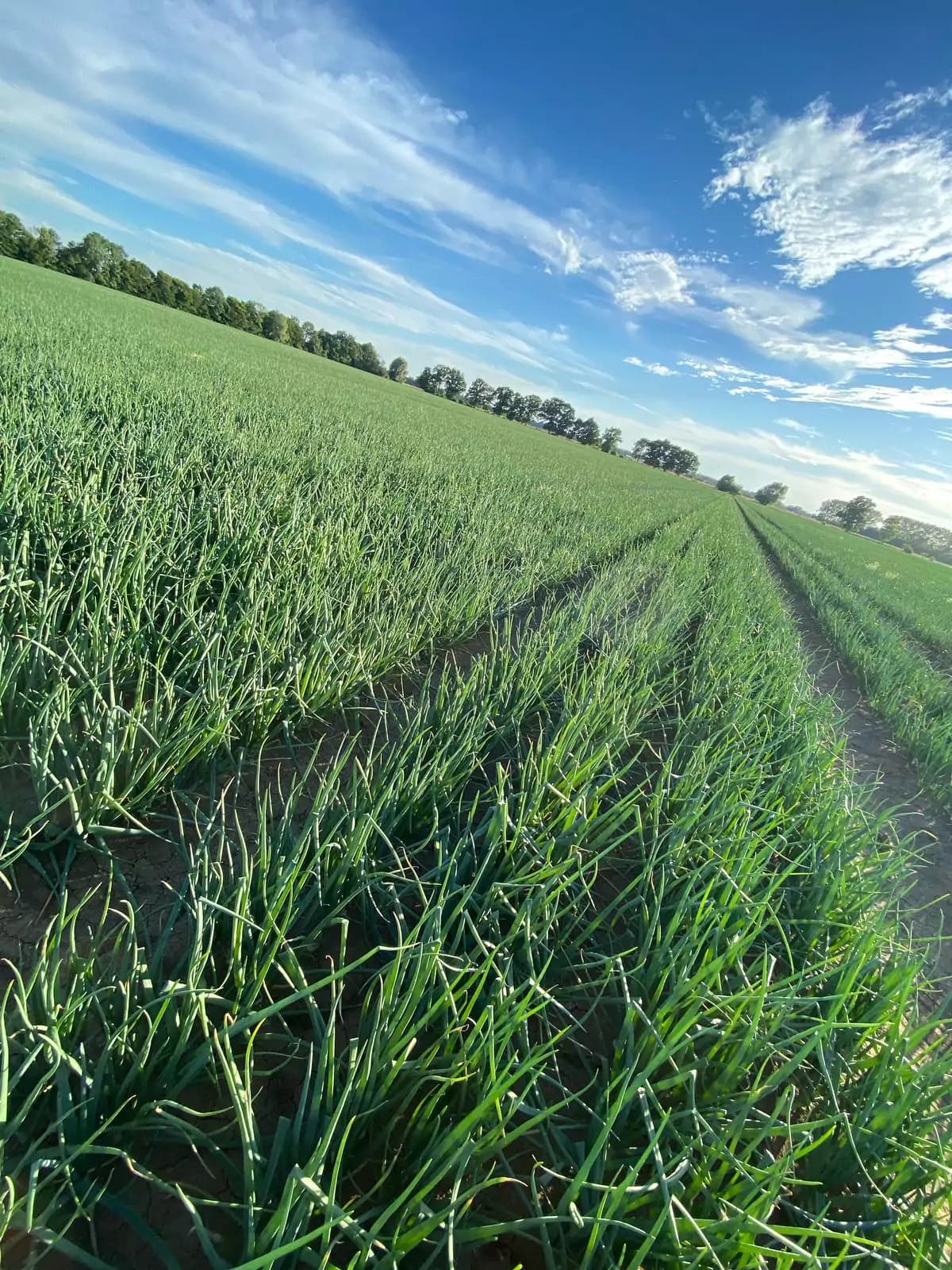
We harvest onions from around 250 ha in two stages: first we lift them and lay them in windrows to dry down, and only then pick them up with the harvester. Between one stage and the other the crop lies in the field waiting for dry days. If a machine stops at that point, we are not simply pushing the work back by a day. We are pushing it onto weather that may not come, and onions in windrows do not wait for ever. The potato harvest works the same way, where the date is set by skin maturity and tuber temperature, which we describe in our post on when we lift potatoes for fries.
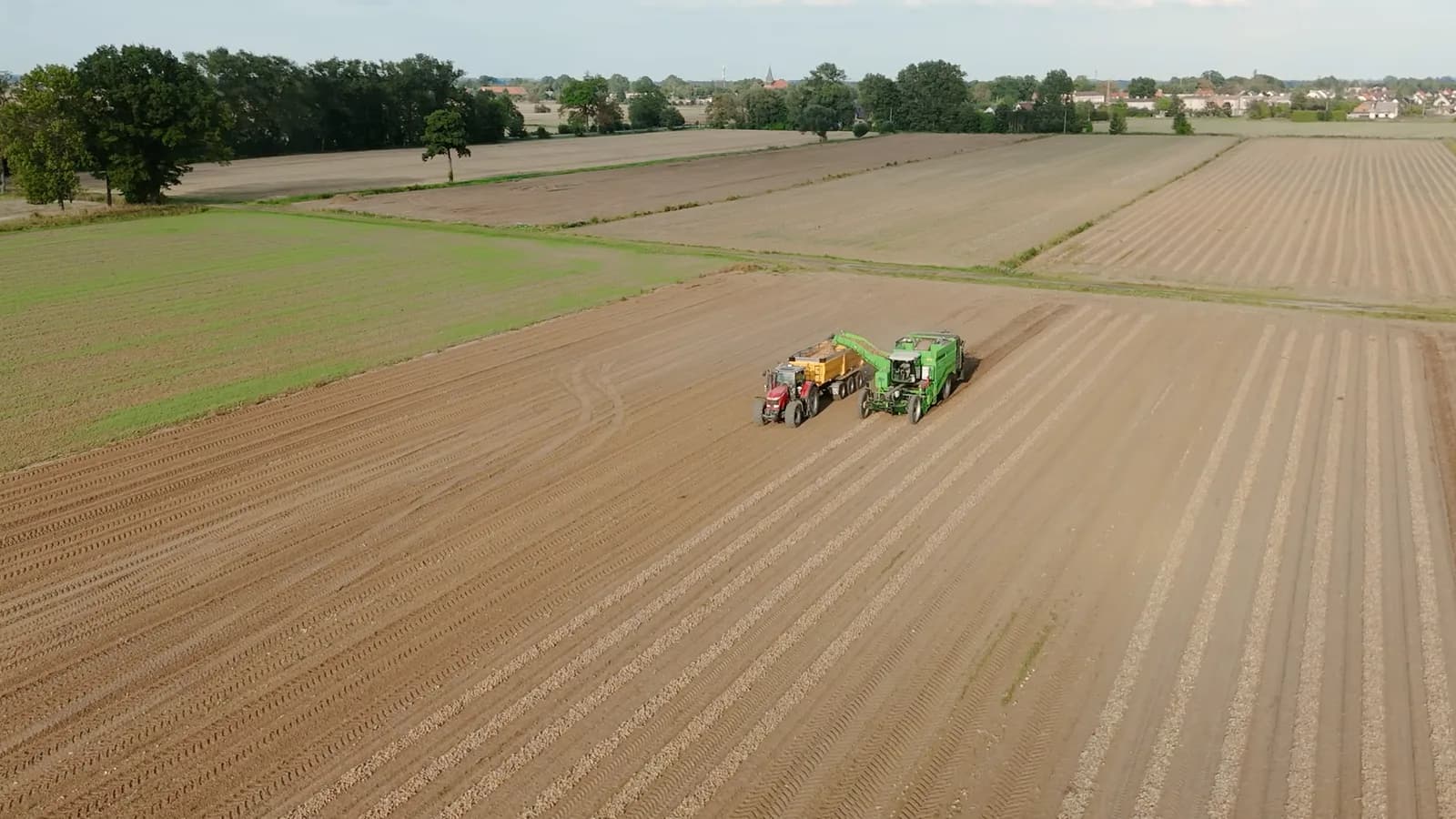
So we look at readiness as a chain, not as a list of machines. Our fleet is 87 machines, but on any given day only the slice of it that serves one field counts: the windrower, the harvester, the tractors, the haulage rigs and intake at the store. The pace of the whole is set by the weakest link, which we write about at greater length under hauling onions off the field.
What we check before the season, machine by machine
We do the pre-season check calmly, in the order the machines will go to work. We run each one empty, because most faults can be heard and seen before a machine touches the crop.
| Machine | What we check | What neglect leads to |
|---|---|---|
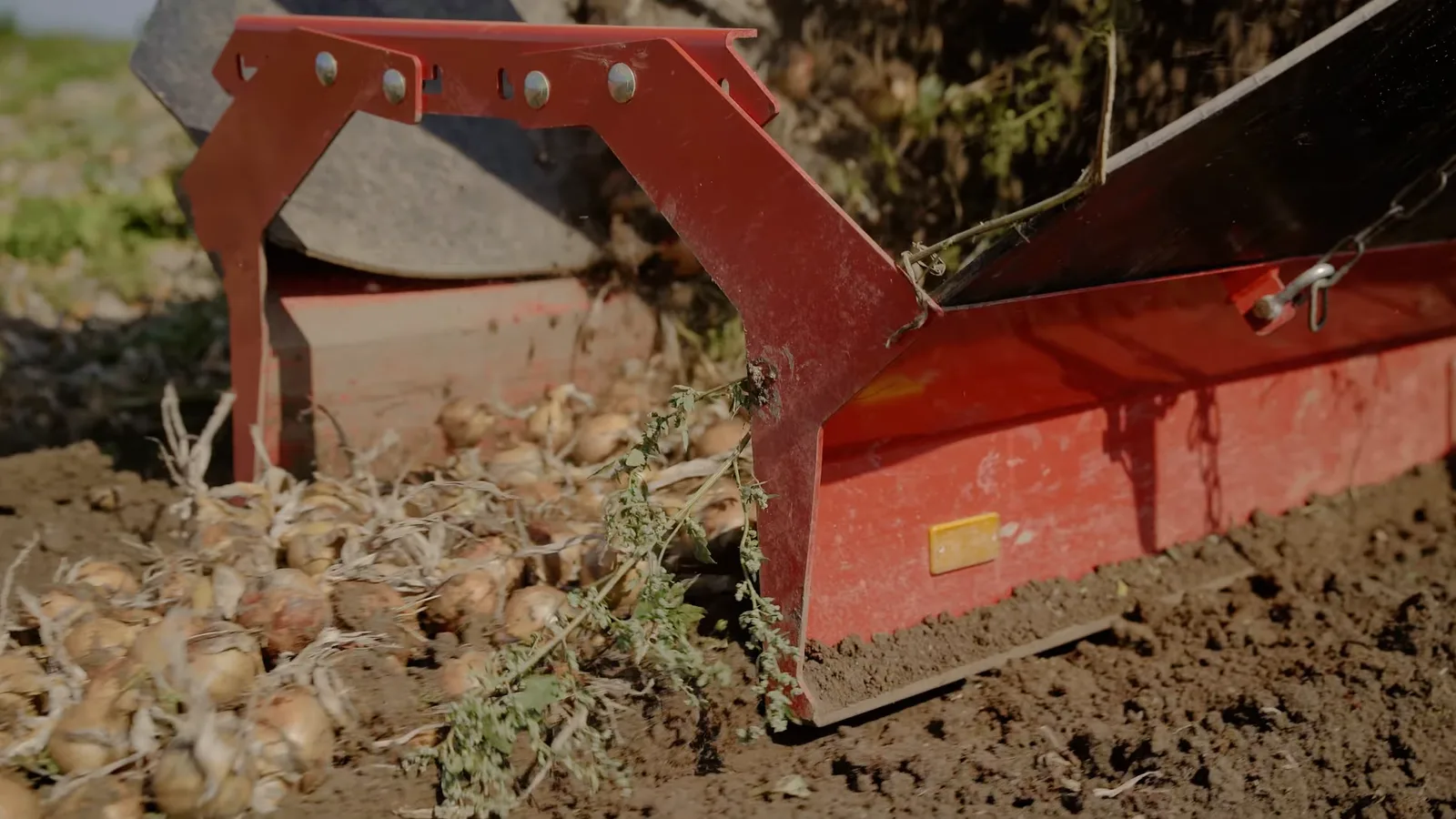
| Grimme WV 180 windrower | shares, clearances, the width setting of the windrow | torn skin and onions covered in soil |
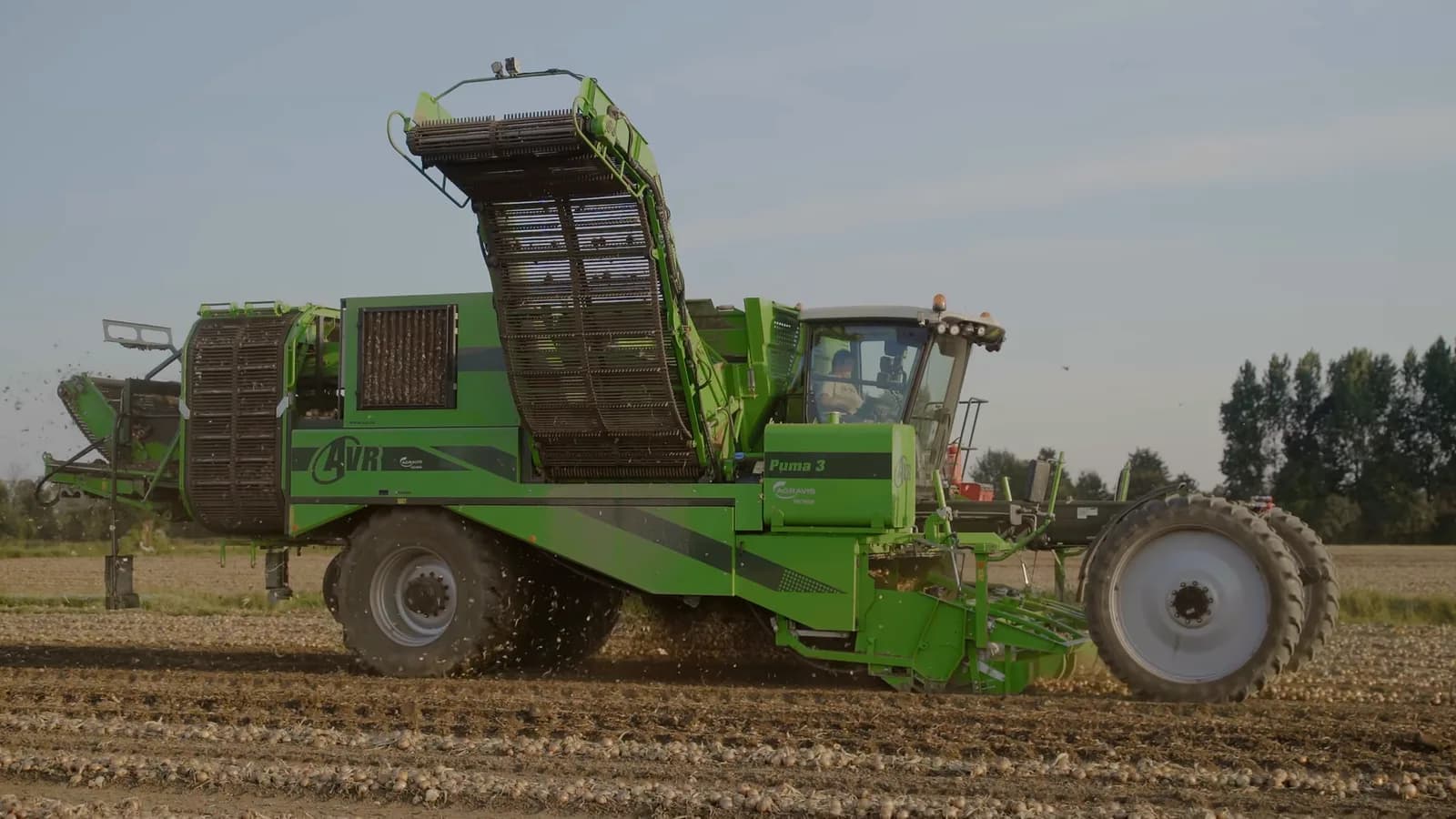
| AVR Puma 3 harvester | belts, rollers, drop heights, unloading, hydraulics | bruising, downtime, an overfilled bunker when unloading cannot keep up |
| Tractors | filters, fluids, tyres and pressures, navigation | wheelspin on alluvial soil, compaction, work cut short |
| Haulage trailers | sides, liners, lights, brakes | damage to the crop and a rig standing idle |
| Store ventilation | fans, sensors, ducts, controls | a badly cured batch and losses in the warehouse |
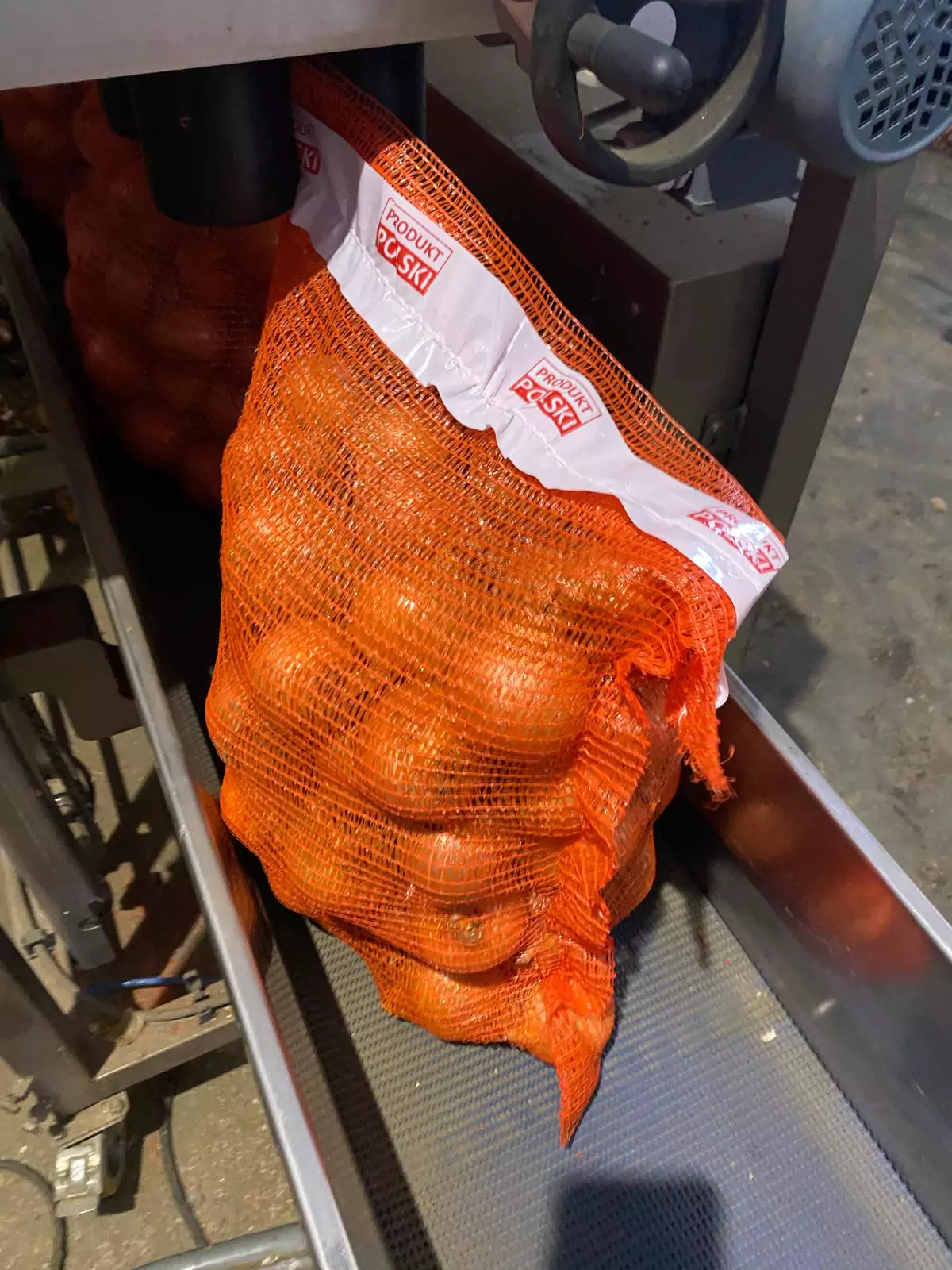
| Sorter and packing line | brushes, belts, cameras, calibration | a jam on the line on dispatch day |
Settings for gentle handling, meaning drop heights and belt speeds, are a separate subject, which we describe under mechanical damage to vegetables. Here it is about something earlier: having something to set at all once the weather gives the green light.
Parts we keep on hand
What matters is not the list of tools but the list of things that wear out predictably. Those we buy ahead of time, because at the peak of the season delivery can take longer than a whole weather window:
- belts, drive belts and rollers for the harvester and the line,
- shares and blades, which wear out on alluvial soil faster than on light soil,
- filters and fluids for the tractors,
- hydraulic hoses and quick couplings,
- work lights, because at the peak we work at night as well,
- brushes and small parts for the packing line.
The rule we go by: if a part wears out every season, replacing it belongs to the preparations, not to the repairs. A repair in the field costs several times more than the same job done calmly before the season.
The pre-shift check, a quarter of an hour a day
In season every shift starts with the same walk-round. Greasing the pivot points, tyre pressures, belt tension and condition, the clearances where the crop drops from one element onto the next, clean sieves and the lights for the evening. Plus a quick look at whether anything is leaking and whether anything is running louder than the day before.
When the harvest runs on two shifts, we do the walk-round at the changeover too, not only in the morning. A machine that has worked half a day and more looks different from one that has just come off the yard.
When a machine does stop
Breakdowns cannot be ruled out, so we have a simple order of action:
- We check what is holding up the chain. We react one way when the harvester stops and another when one of the haulage rigs does. The AVR Puma 3 harvester works at up to 150 t/h, so an hour of it standing idle drops out of the day's plan and cannot be made up.
- We shift the work rather than wait. If the pick-up stage is down, we move people onto lifting, preparing the chambers or packing, so the day is not lost entirely.
- We protect the crop already lying in the field. Priority goes to the batch most exposed to rain, because wet onions in a windrow go off faster than onions still untouched.
- We write the fault down. A breakdown that comes back every year stops being a breakdown and becomes an item on the preparation list for the next season.
What machine readiness gives the buyer
For a buyer what counts is not how many machines we have but whether the goods arrive on time and in good condition. A harvest chain that works means three things: the onions come off the field in a window when they are dry, they reach curing within a few hours of harvest, and batches do not get mixed because something had to be rescued in a hurry. We describe the most important machines on the machinery page, and the rules we pick it by in our post on a farm machinery fleet.
If you are looking for a supplier that harvests, cures and packs its own produce, get in touch through the contact form. We calculate the price based on current market rates.