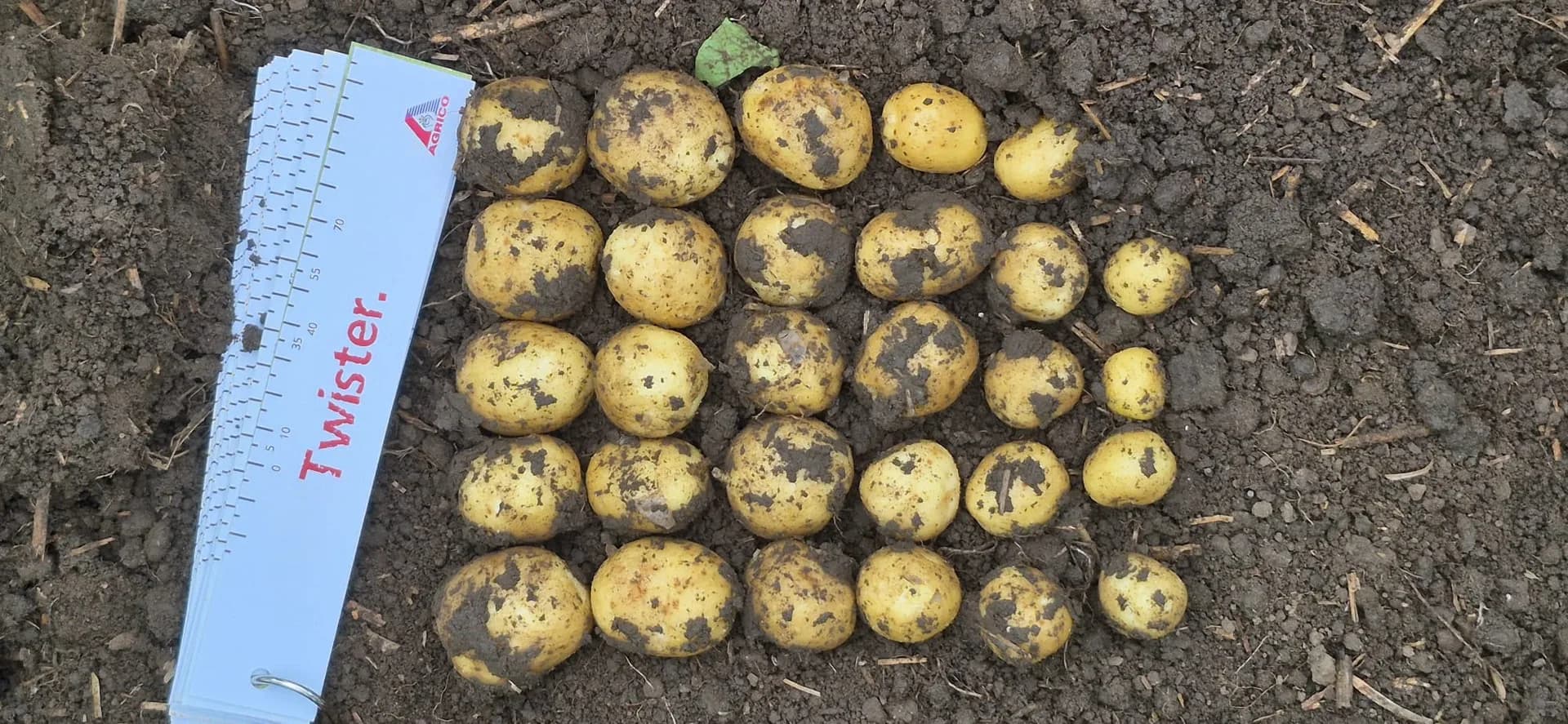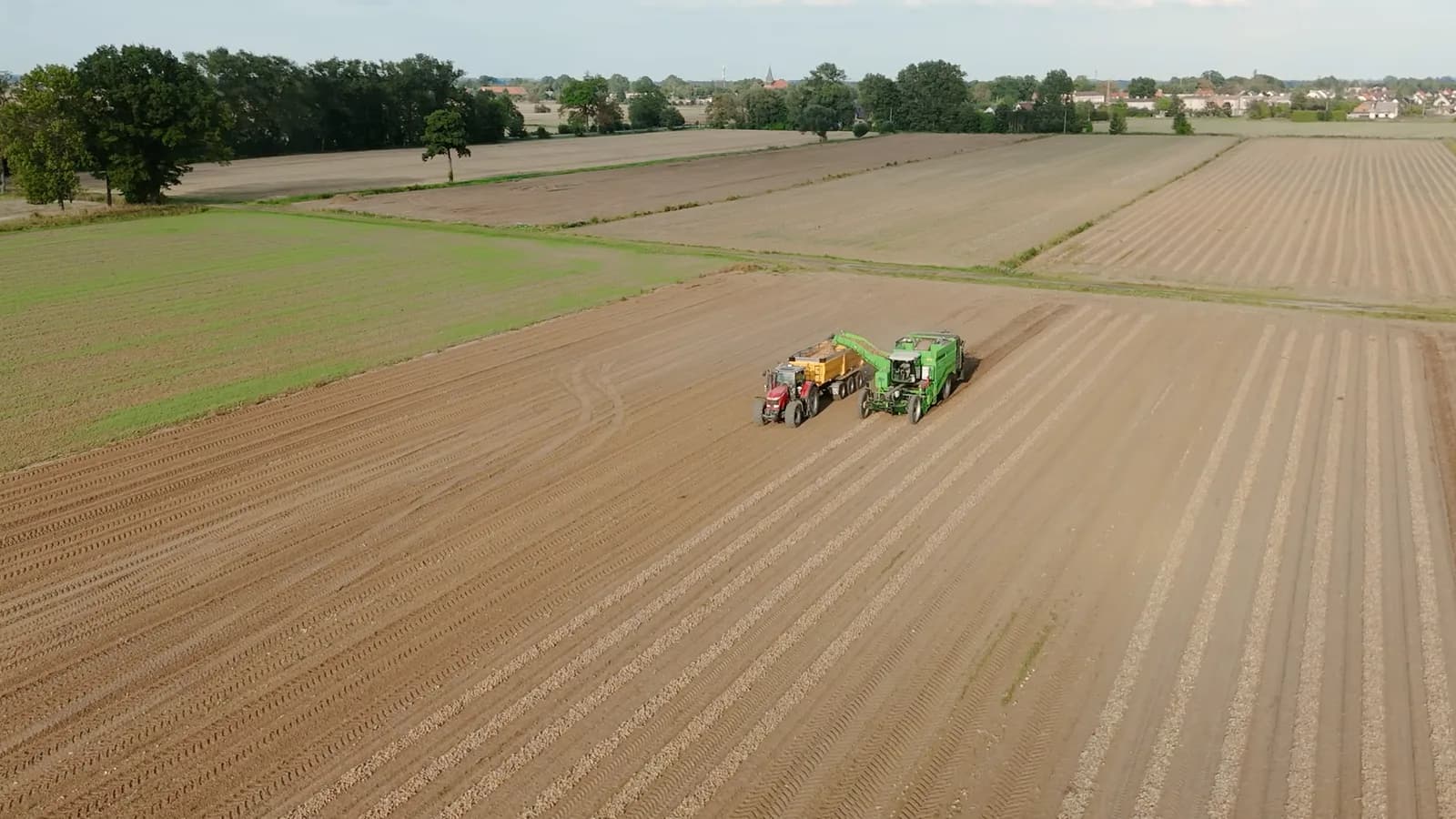
The carbon footprint of vegetables is worked out from data that comes into being in the field and in the warehouse: how much fuel the machines burned, how much nitrogen went onto a hectare and in what form, what the yield was, and how much energy the store and the packing line used. A farm does not supply a finished result, only the input figures and proof that they are true. Below we show what buyers ask for, where we get this data from and what really lowers emissions per tonne of vegetables.
Why a packhouse asks the farm about emissions
For a processing plant and a packhouse, the emissions tied to the raw material are the biggest item in the account, and at the same time the only one they cannot work out on their own. In company reporting this is the area called scope three, meaning emissions in the supply chain, outside their own production and outside the energy they buy. The buyer can measure the electricity in the hall with a meter. The nitrogen spread under the onions and the diesel burned at harvest is known only to whoever did the work.
The requirements flow down the chain, because big buyers have to report themselves and are asked the same questions by their own customers more and more often. In practice that means questionnaires sent to suppliers, annexes to annual contracts and questions during audits. We write about them in our post on what buyers require for export.
What data goes into the calculation
| Data category | What we supply | Where it comes from |
|---|---|---|
| Fuel | diesel use over the season | machine work and refuelling records |
| Fertilising | rates and forms of nitrogen, phosphorus, potassium, sulphur | the fertilising plan and the record of applications |
| Crop protection | number of applications, rates, substances | the record required under Integrated Production |
| Yield | tonnes per hectare for the given crop and field | intake records for produce coming off the field |
| Energy | electricity use in the store, in curing and in the packhouse | meters and invoices |
| Water | irrigation, the number and size of applications | sprinkler irrigation records |
| Soil | cover crops, crop residues, liming, cultivation | the field plan and the record of operations |
| Transport | distance and mode of transport to the buyer | transport documents |
Most of these figures exist regardless of any questions about emissions, because Integrated Crop Production and quality audits require them. So a buyer's questionnaire is more often work on pulling the data together than on collecting it from scratch. We agree the level of detail at the start: some items we give for the whole farm, some we break down by crop, and a few only by field.
Yield counts as much as fertiliser
This is the most common misunderstanding in conversations about emissions in farming. Emissions are counted per tonne of produce, not per hectare, so the denominator matters as much as the numerator. An onion field that gives 60 tonnes per hectare spreads the same fuel and fertiliser emissions over twice the mass as a field giving half that yield.
Hence a conclusion that does not sound obvious: good agronomy and a low footprint pull in the same direction. Fertilising matched to the nutrient level of a zone instead of one rate across the whole field, spot spraying instead of a full rate per hectare, and fewer passes over the field all cut cost and emissions at the same time. How we do it, we describe under variable rate fertilising, and how much we really take off a hectare in our post on how much onion a hectare gives.
Losses in the chain are emissions too
Produce that is grown and then thrown away carries its full footprint, only with nothing to show for it. That is why, in a conversation about emissions, how well a batch keeps counts, not the field balance on its own. A store of 13 000 tonnes lets us cool and cure onions right after harvest and then release them through the whole year, instead of pushing the entire crop out in the few weeks of the harvest peak. Fewer transfers, a steady temperature and sorting before dispatch mean less produce that spoils at the buyer's. We describe this under onion storage losses and under how we manage sales from the store.
What we already have confirmed on paper
We hold an FSA (Farm Sustainability Assessment) rating at Gold level, the highest of the three in this sustainable farming assessment scheme, and its metrics are linked to the Cool Farm Tool calculator used in the trade to count emissions. On top of that come GlobalG.A.P., GRASP, GMP+ and Integrated Crop Production. We describe the details in our post on the FSA Gold rating.
What we do not do: we do not quote our own number of kilograms of carbon dioxide per tonne as a marketing fact. The result depends on the methodology chosen, the system boundaries and the factors used, so two calculators can give different numbers for the same field. One of two routes makes sense: we calculate together with the buyer in their tool, or we hand over the full set of input data and let their team do the maths. Both start from the same field records.
How working on an environmental questionnaire looks
- We set the scope. Which crops, which fields and which year, because the data concerns a season, not the farm in general.
- We pull the data together. Fuel, fertiliser, crop protection, yield, energy, water, transport.
- We attach the evidence. Certificates, records of applications and the batch record, so the figures can be checked rather than taken on trust.
- We update after the season. Field data changes every year along with the weather and the yield.
If you buy vegetables and need a supplier who can hand this data over, take a look at our onion offer and get in touch through the contact form. We calculate the terms and the price based on current market rates.