Guides to farm machinery fleets are usually written from behind a desk: which machines to choose, what pays off, what to lease. We will come at the subject from the other side. We farm over 800 hectares, around 400 hectares of it vegetables, and we work with 87 machines. This post shows how such a fleet comes together in practice: what follows from what, what needs doubling up, and why the machine count grows faster than the hectares.
Why as many as 87 machines
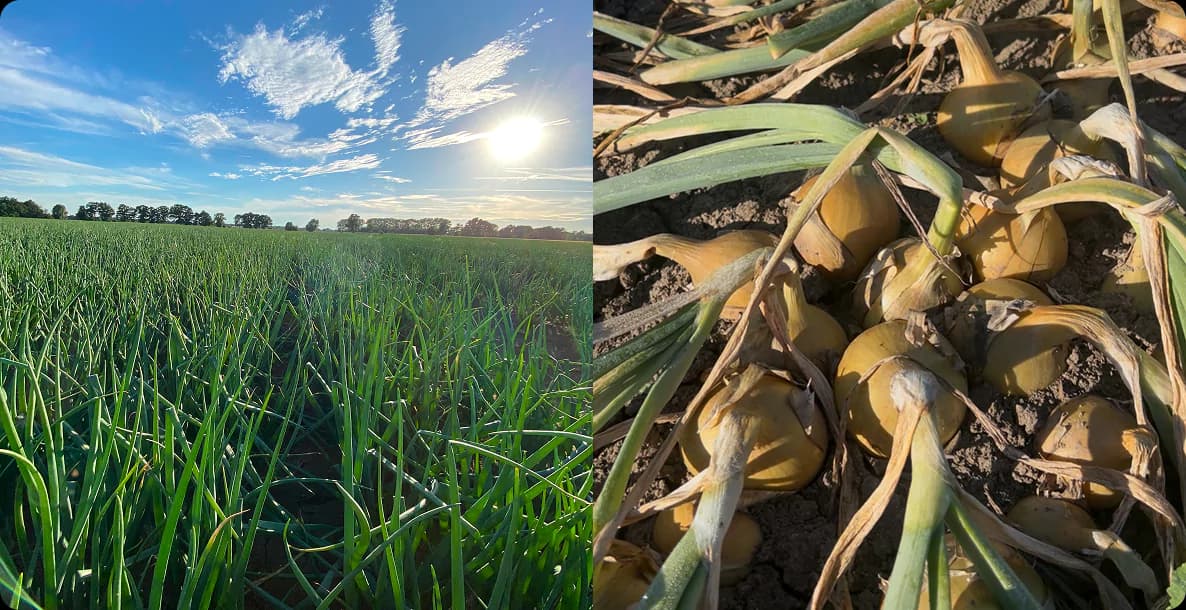
If we sowed those 800 hectares with nothing but cereals, a fraction of this equipment would do: a few tractors, a drill, a sprayer, a combine. Vegetables change everything. We grow 8 crops, and each has its own agronomy: onions need a precision drill, a windrower and a separate harvest line, potatoes a planter and a harvester, beetroot and green peas yet more tools. Equipment does not swap between species as easily as you might think.
The second reason is Żuławy. We work heavy alluvial soils in the Vistula delta, where weather windows can be short: after rain the field keeps machines out for a long time, and the onion or potato harvest has to fit between one spell of rain and the next. So we plan the fleet not for the average but for the peak: when good weather comes, everything has to move at once.
What is in the fleet
| Group | What we run | What for |
|---|---|---|
| Tractors | Fendt 942, 936, 828, 724 and 620 Vario, John Deere 8RX 410, John Deere 6930 Premium | tillage, drilling, crop care, haulage |
| Harvest | AVR Puma 3 self-propelled harvester, Grimme WV 180 windrower | potatoes and two-stage onion harvest |
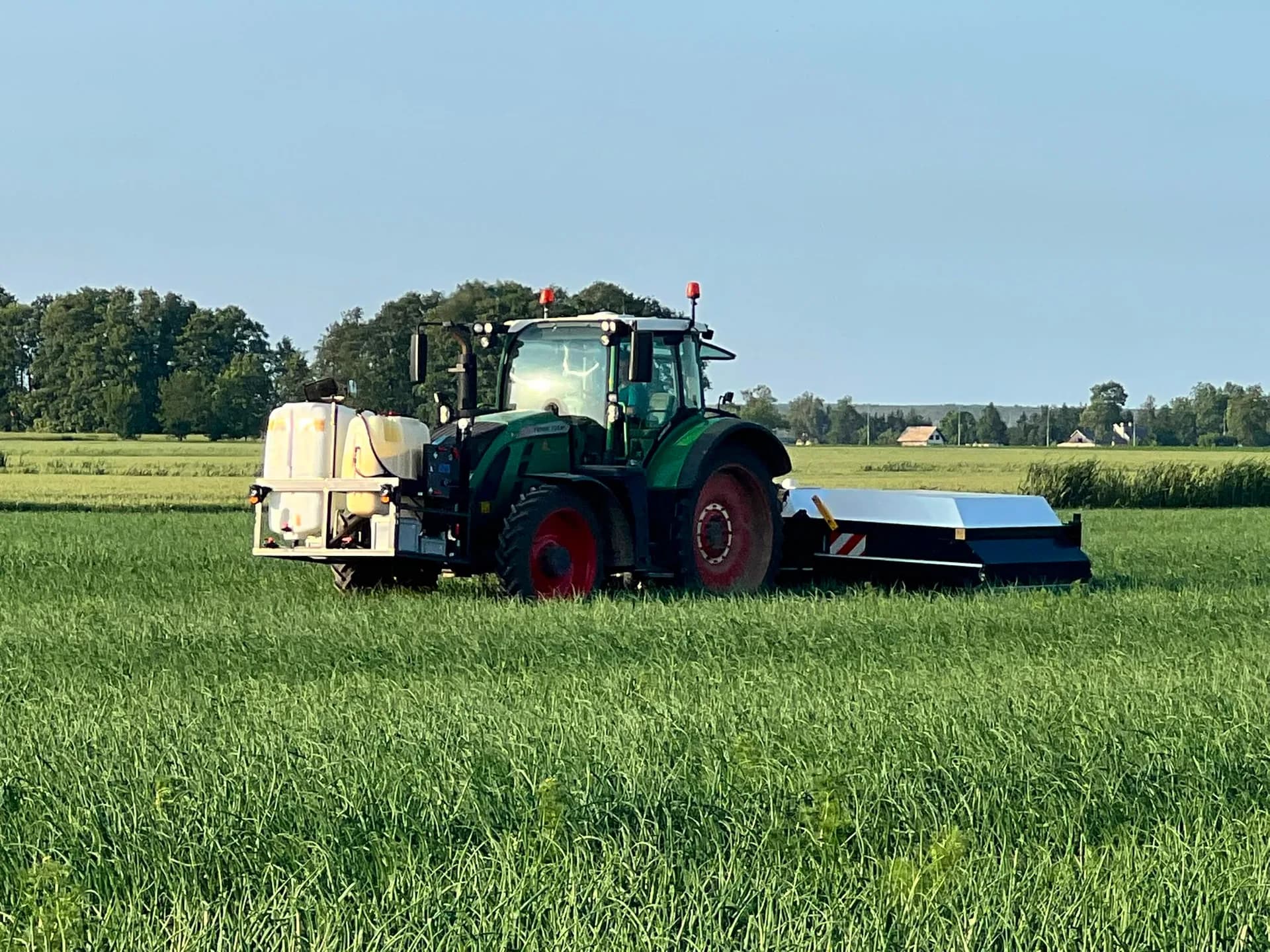
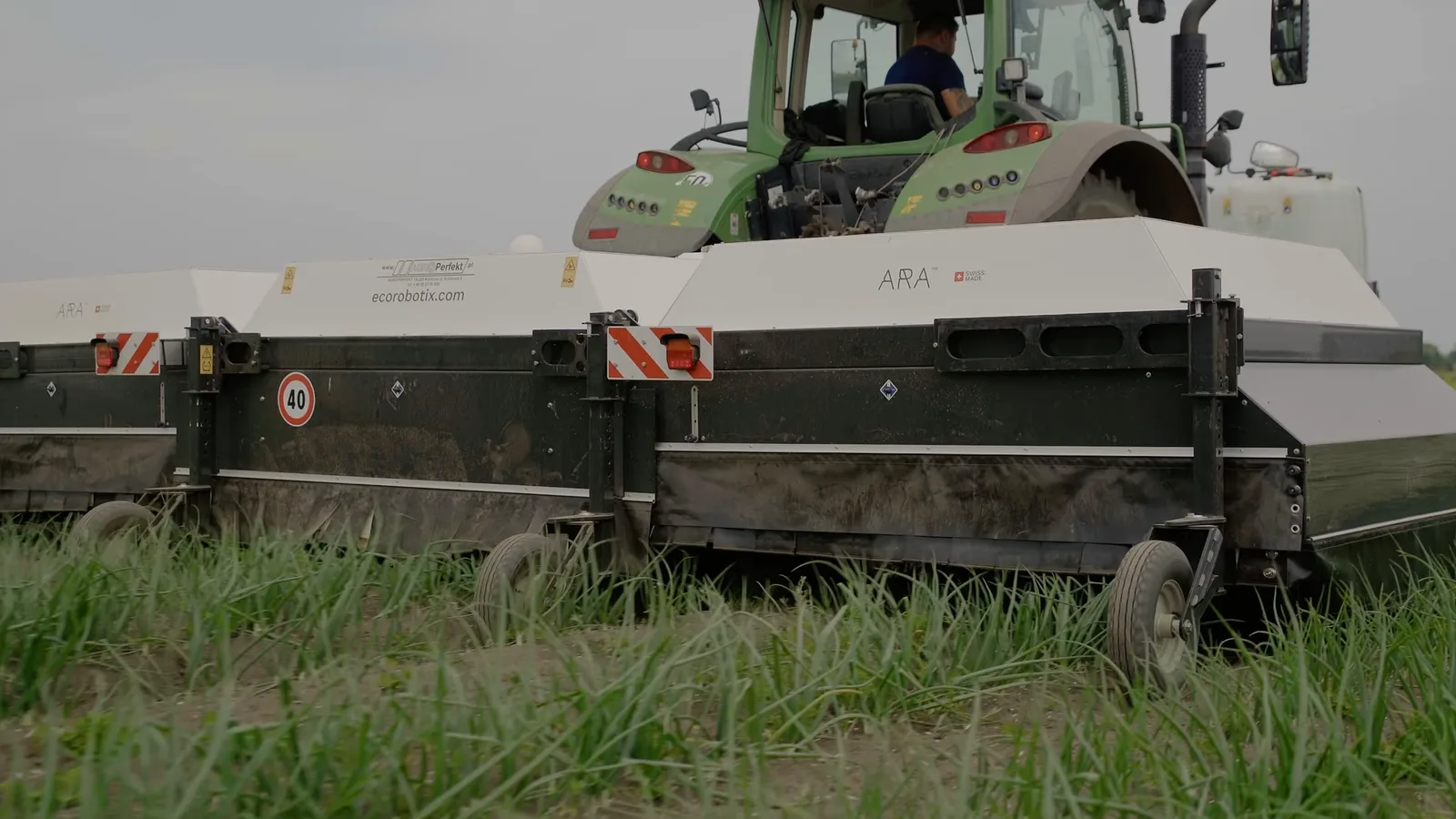
| Crop protection | including the Ecorobotix ARA spot sprayer | precision spraying, around 70 percent less chemical use |
| Irrigation | boom and reel irrigators | watering emergence and saving the crop in drought |
| Transport | trailers, including a Wielton tridem | haulage from field to store |
| Warehouse | DOWNS CropVision optical sorter, packing line with palletiser | grading, packing, palletising |
That is a summary, of course: between these entries sit tillage combinations, drills, hoes and all the smaller implements that round out the 87.
The rules we plan the fleet by
One navigation standard. We steer all key machines by GPS with RTK correction, accurate to a few centimetres. Passes do not overlap, and every machine hits the same tramlines no matter which tractor happens to be driving.
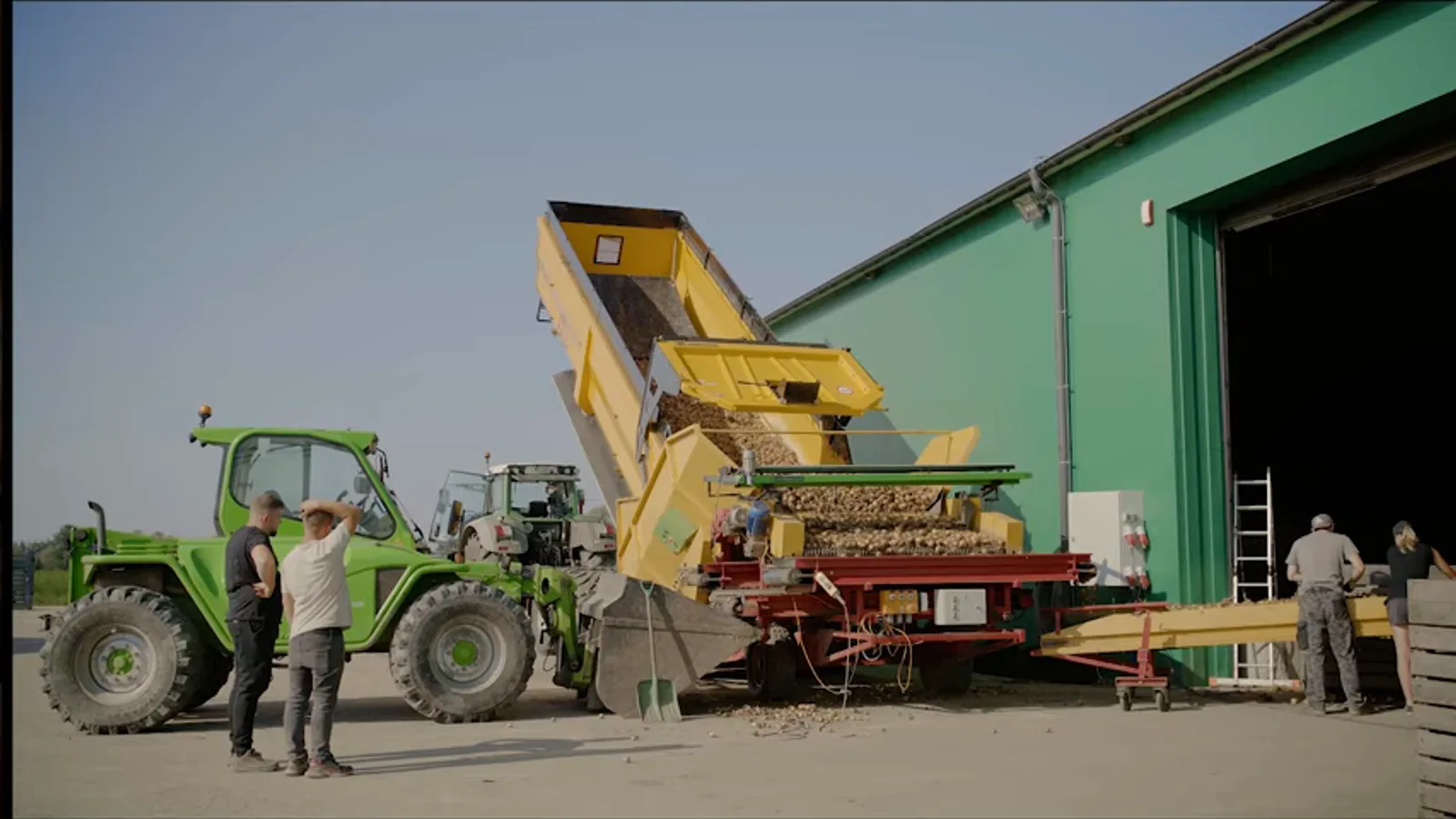
Bottlenecks without spare capacity are asking for trouble. The onion harvest can run at up to 150 tonnes per hour. That stream has to keep flowing: harvester, haulage, intake at the store. If any link stops, everything stops, so we double up the haulage and plan with a margin.
The tractor fits the job, not the other way round. The tracked John Deere 8RX 410 works the heaviest tillage, where pulling power and protecting the soil from compaction matter most. The lighter Fendts take drilling, crop care and the jobs where 400 horsepower would just burn fuel. We cover this split in more depth in our post on our Fendt and John Deere tractors.
Winter is service season. Eighty-seven machines will not keep themselves ready. We do inspections outside the season, so that breakdowns do not eat up weather windows in May and September.
The machines you can see in the quality of the goods
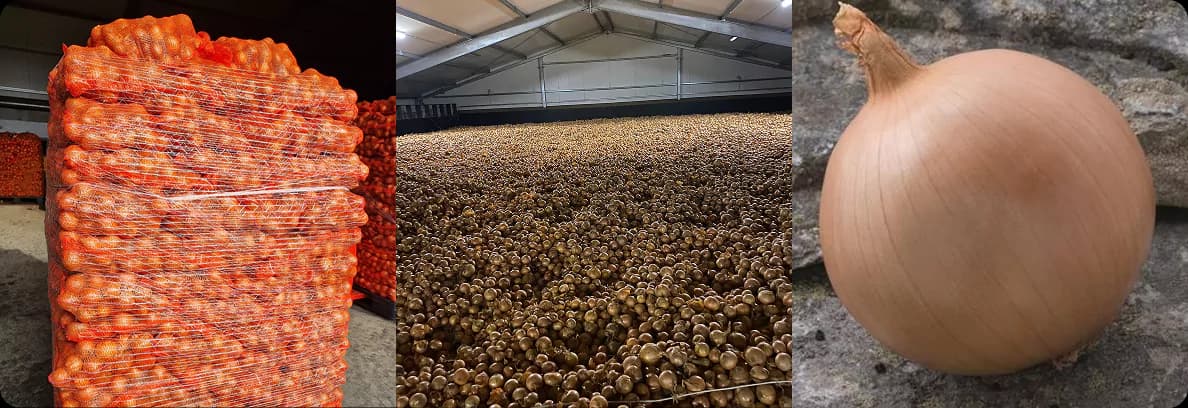
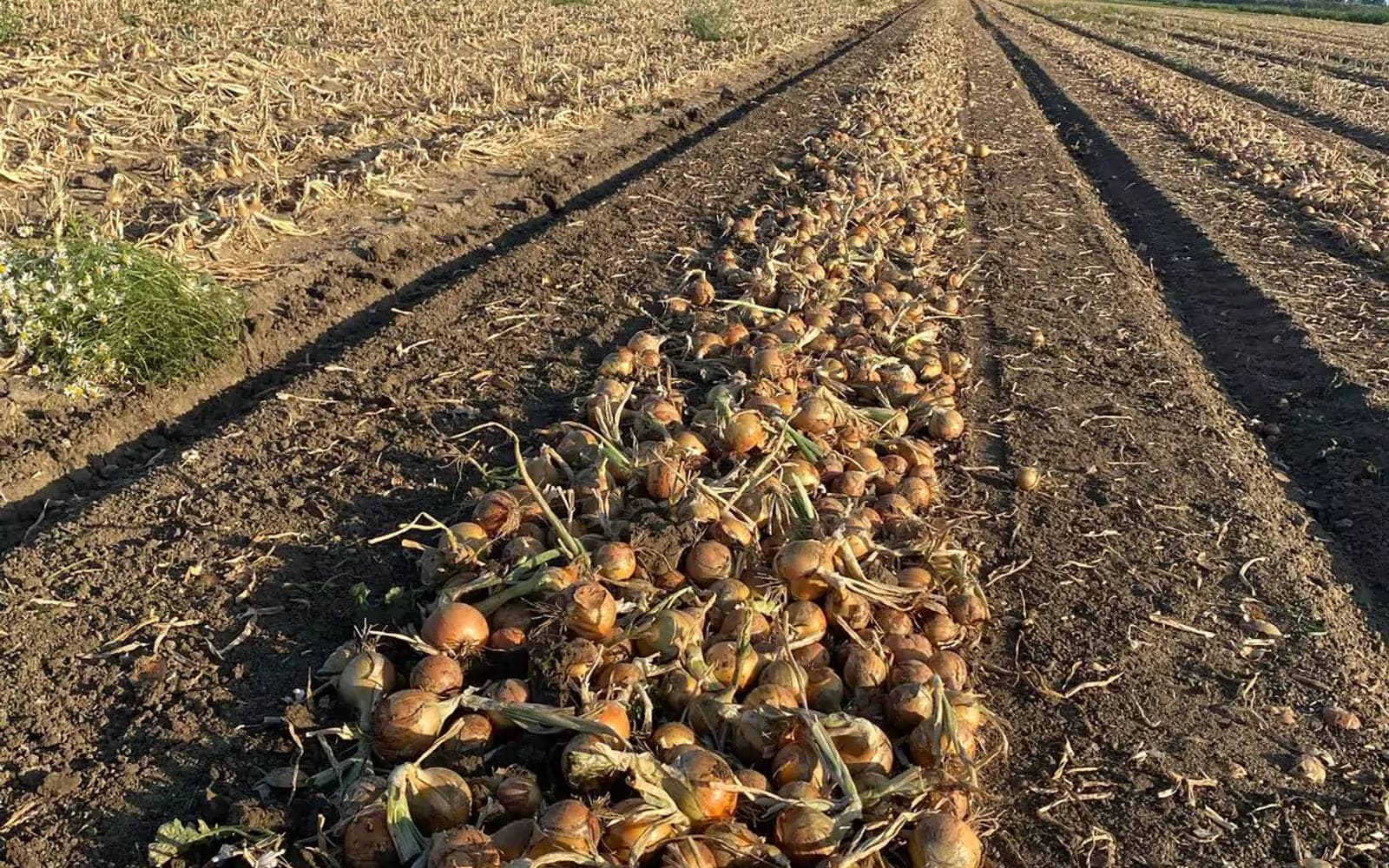
Part of the fleet works not for hectares but for quality. The Grimme WV 180 windrower lays onions in windrows to finish drying, so the goods roll into the store with closed necks. The DOWNS CropVision optical sorter scans every onion through 360 degrees and rejects stones, clods and defective bulbs before the batch reaches a pallet. And the Ecorobotix ARA spot sprayer cuts chemical use by around 70 percent, which later shows up in the residue tests.
We have collected the full list of our key machines, with photos and specs, in our machinery fleet.
What all of this means for the buyer
A wholesale buyer does not buy machines, they buy certainty of supply. A complete fleet means we can bring the crop in within a short weather window, cure it, grade it and deliver it on time, whatever the Żuławy autumn throws at us. That is how we understand growing onions in Żuławy, from the first pass to the pallet. If you are looking for a vegetable supplier with this kind of backing, write to us via the contact form and we will put together a specific offer.