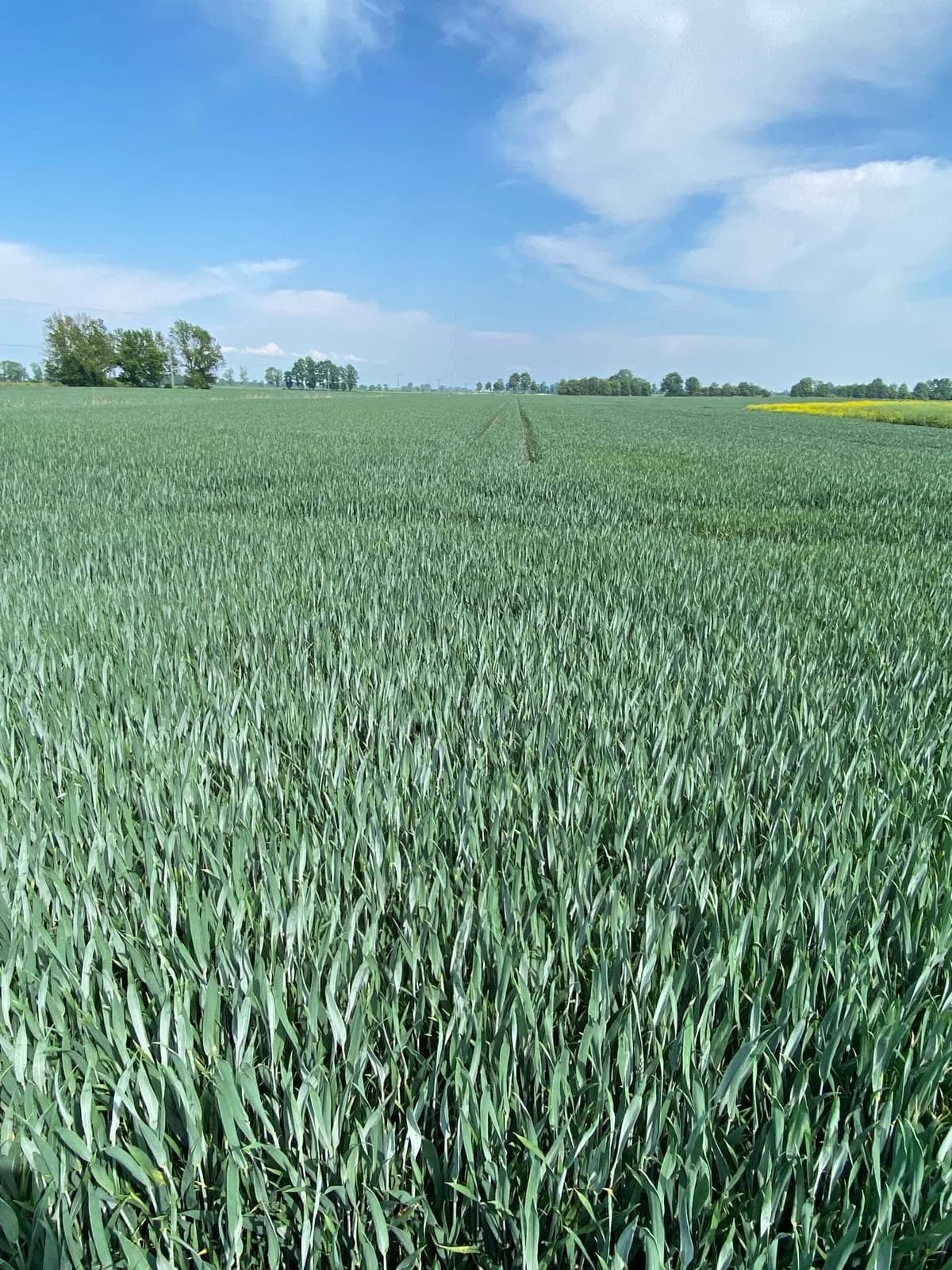
Onions grow best on soil with a near-neutral reaction, in practice at a pH of around 6.5-7.0 on mineral soils, and they cope very badly with acidity. On acid soil they take up nutrients less well, build a smaller root system and fail to reach size, even if fertilisation is in order. In the Żuławy region we grow around 250 hectares of onions on alluvial soils, which are rich in calcium but not uniform, so we test the pH zone by zone on every field and lime where the test calls for it, always ahead of the preceding crop, never just before sowing.
What soil pH onions like
Onions are among the crops sensitive to acidity. The fertiliser recommendations of Poland's Institute of Horticulture give a pH range of 6.5-7.5 for mineral soils and treat liming as necessary when the pH drops below 6.0. At pH 5.5 and below, onions suffer twice over: aluminium toxic to the roots appears in the soil solution, and phosphorus and molybdenum become hard to access. Above pH 8.0 the plant also grows poorly, because it runs short of micronutrients.
The reason for the sensitivity is simple. Onions have a shallow, poorly developed root system without root hairs, so they need nutrients served close by and in a readily available form. On acidified soil even well-balanced nitrogen and sulphur fertilisation of onions does not translate into yield, because the plant cannot take it up.
| Soil pH | What happens to the onions |
|---|---|
| pH below 5.5 | sharp drop in yield, aluminium toxicity, weak root system |
| pH 5.5-6.0 | onions grow but do not use the fertiliser, smaller size; time to lime |
| pH 6.5-7.5 | optimum: good availability of phosphorus, calcium, magnesium and molybdenum |
| pH above 8.0 | drop in yield, manganese, boron and zinc locked up |
Żuławy alluvial soils: an asset, but not automatic
Our fields lie on alluvial soils deposited by the Vistula. They are heavy, humus-rich soils well supplied with calcium, often with a neutral or slightly alkaline reaction. Why they give us onion yields of around 60 tonnes per hectare, we explain in the post on Żuławy alluvial soils for onions.
It would be a mistake, though, to assume that liming is not needed in Żuławy. Soil pH surveys of the Vistula Żuławy show wide variation: roughly one sample in four is acid, about half are slightly acid, and only about a quarter have a neutral or alkaline reaction. The alluvial soil by a drainage ditch can be quite different from the soil in the middle of the same plot. So we do not trust the general opinion of the soil, only the results from a specific zone of the field.
The calcium reserves of the alluvial soils give a good starting point, but whether a given zone of a field needs liming is decided solely by a current pH test, not by the name of the soil type.
A high pH has another side too. In zones with a pH close to 7.5 and above, the availability of manganese, boron and zinc falls, and onions need little of them, but regularly. There we look after the micronutrients with foliar feeds instead of counting on the soil to give them up by itself.
When to lime in an onion rotation
The most important rule: we lime ahead of the preceding crop, not directly before onions. Lime needs time to react with the soil and even out the pH through the whole topsoil. Onions cope badly with fresh liming, so the advice is to sow them at the earliest in the second year after the treatment. Lime spread just before sowing will not have time to work, and on top of that it disrupts the availability of phosphorus and micronutrients at exactly the moment when young onions need them most.
With us, liming, if the test calls for it, goes in after the cereal harvest ahead of wheat or triticale, that is one or two years before the onions. Cereal stubble is the most convenient moment: the field is clear, the lime can be mixed into the soil with post-harvest cultivation, and by the spring when onion sowing starts the pH has had time to settle. We do not apply lime at the same time as manure or phosphorus fertilisers. How our onion rotation with wheat and triticale is arranged, we describe separately.
How we test pH and decide on the rate
We do not lime by eye or by the calendar. The basis is a soil test from every plot, and not one sample per field but by zones. The large Żuławy fields are not uniform, and the difference in pH between zones can reach a whole pH unit.
In practice it looks like this:
- We sample by zone, from the same points in successive years, so that we see a trend and not a single result.
- We look at pH and nutrient levels together. The pH decides whether phosphorus, magnesium and micronutrients are available at all, so without that figure the rest of the analysis makes no sense.
- We calculate the lime rate for the zone, not for the whole field, and spread it with variable rate technology. In a single application we do not exceed the rates recommended for heavy soils, because it is better to lime more often and less than once and too much. How we do that in practice, we show in the post on variable rate application.
- We choose the form of lime to suit the soil. On the heavy alluvial soils we go for carbonate lime, which works more slowly but is safer for soil structure; in zones low in magnesium, for magnesium lime.
Liming directly before sowing onions is a common mistake on new plantations. The pH does not have time to even out, and the young plants get phosphorus and micronutrients locked up in the most important weeks of growth.
What soil pH means for the onion buyer
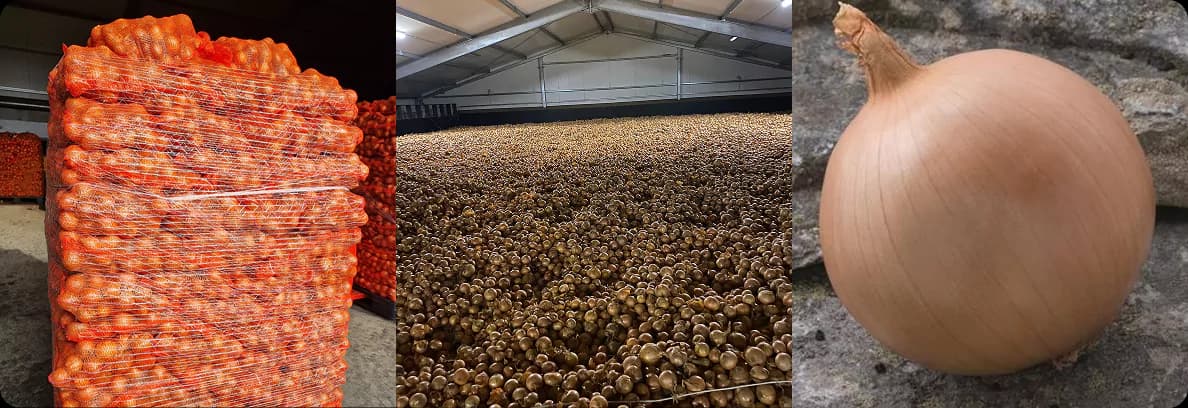
To a packing house or processor, soil pH sounds like a subject purely for the farmer, but it carries through to the produce. Onions from soil with the right pH grow evenly to size, build a compact, hard bulb and a well-formed skin, and that translates into uniform batches and keeping quality in store. Onions from acidified, poorly nourished sites are smaller and less uniform, which is visible straight away on the sorting line.
That is why we treat soil pH as one of the first elements of the whole technology we describe in the guide onions from Żuławy: how we grow them. The result of that technology, yellow and red onions available all year round, is in our onion offer. If you need regular deliveries for a packing house or processing plant, write to us.