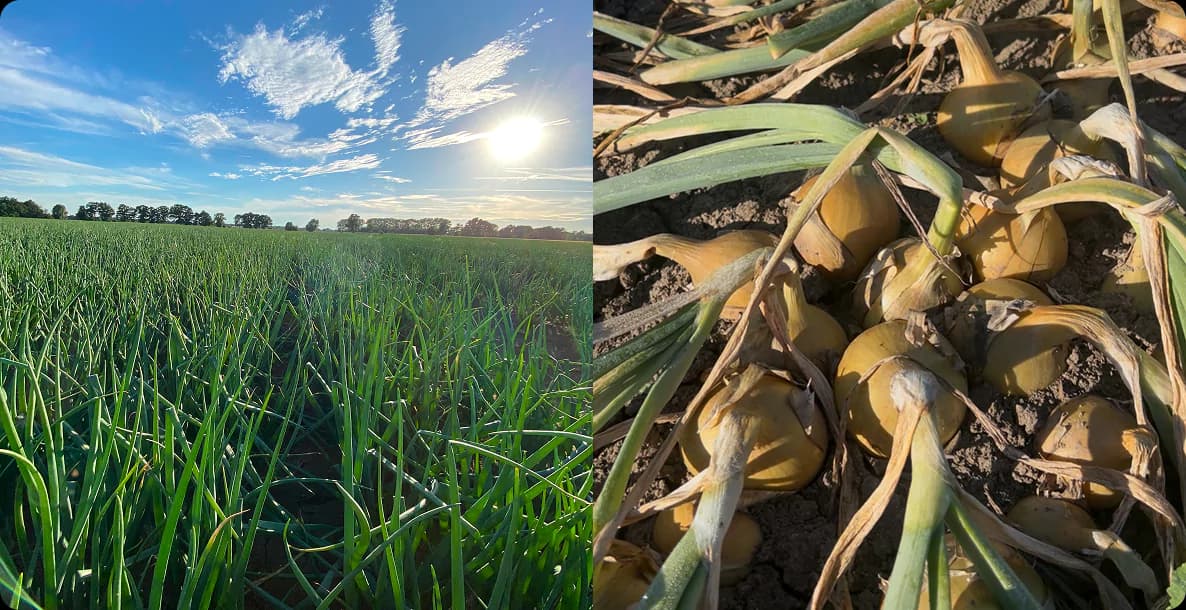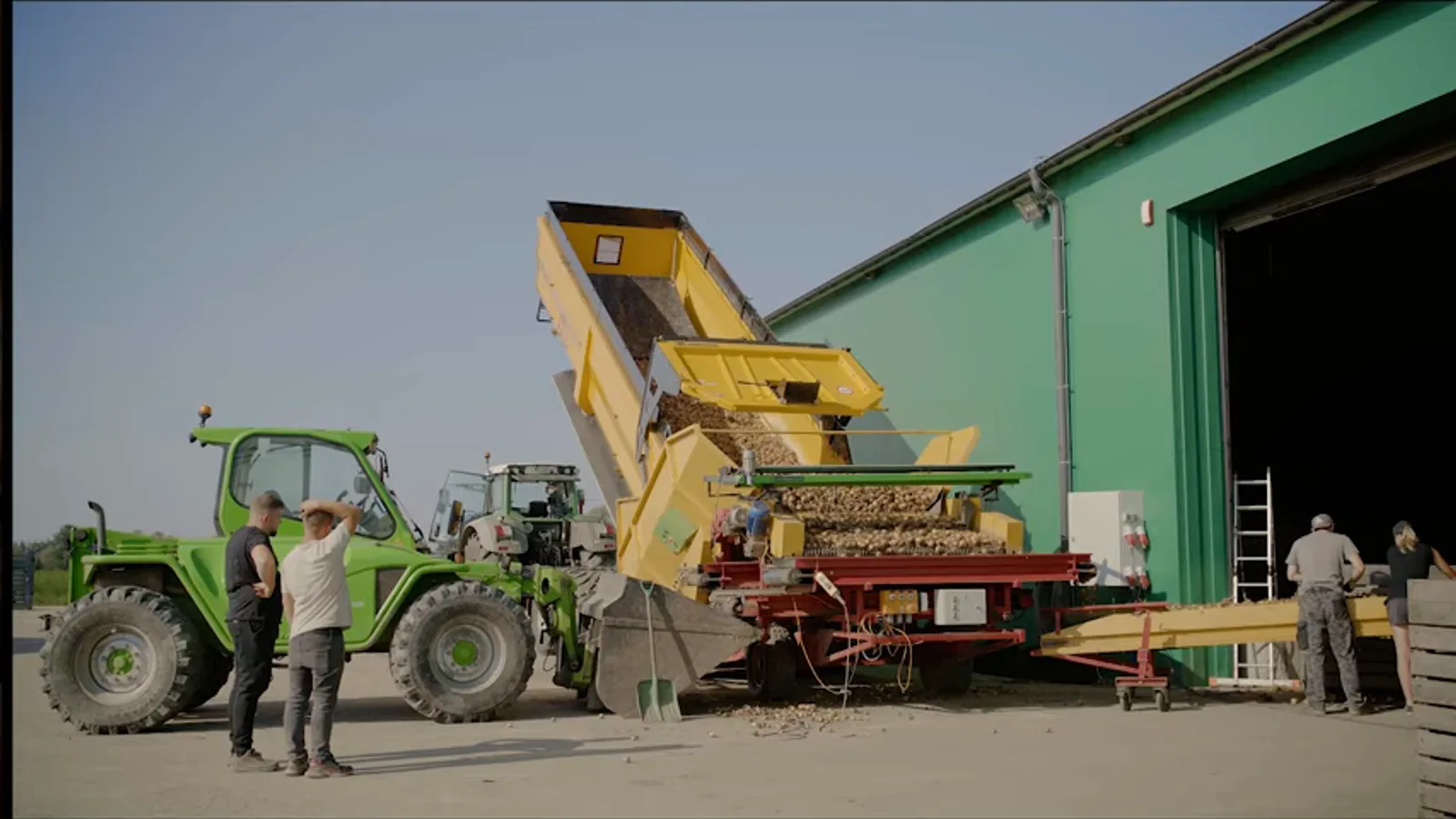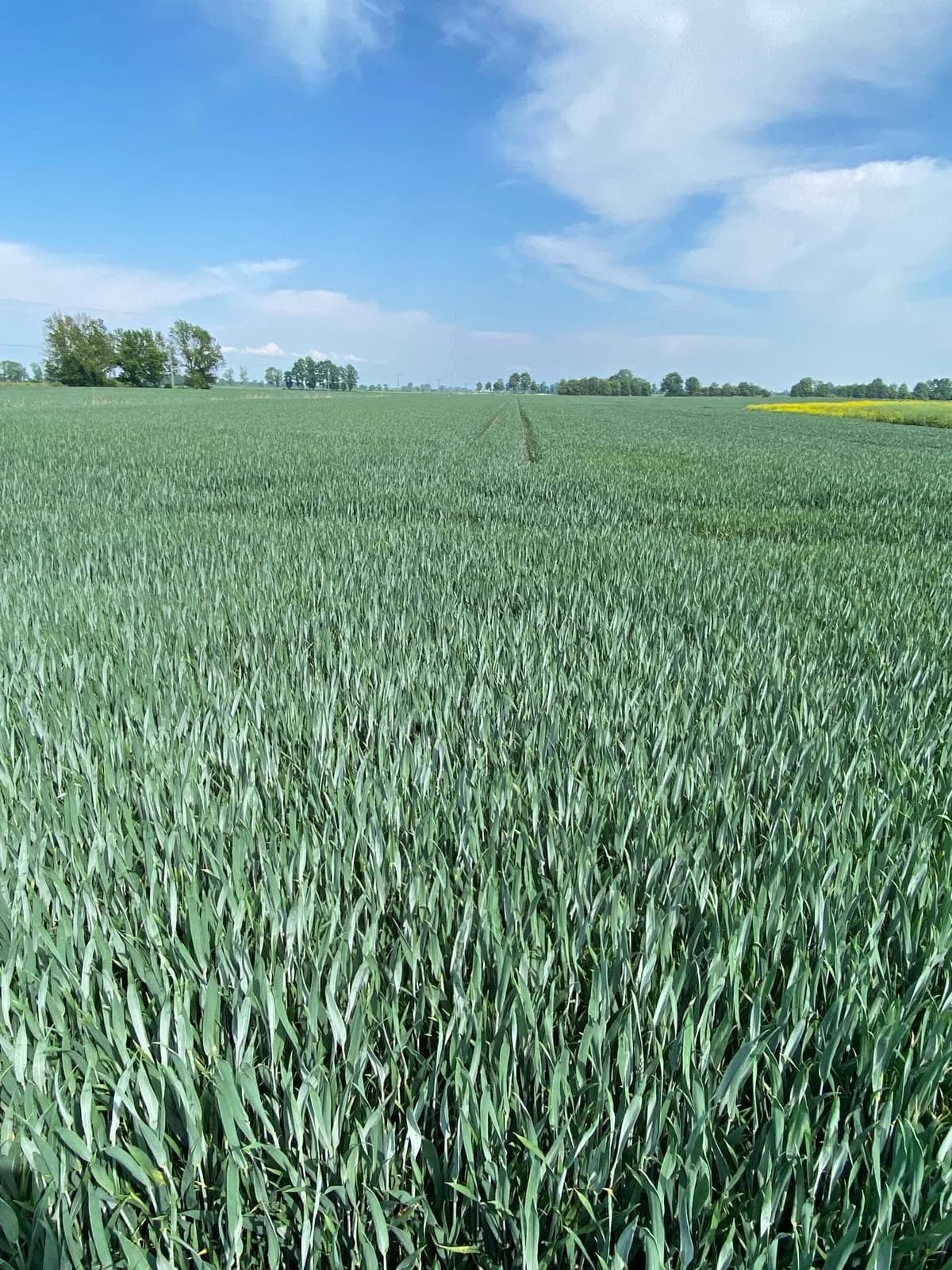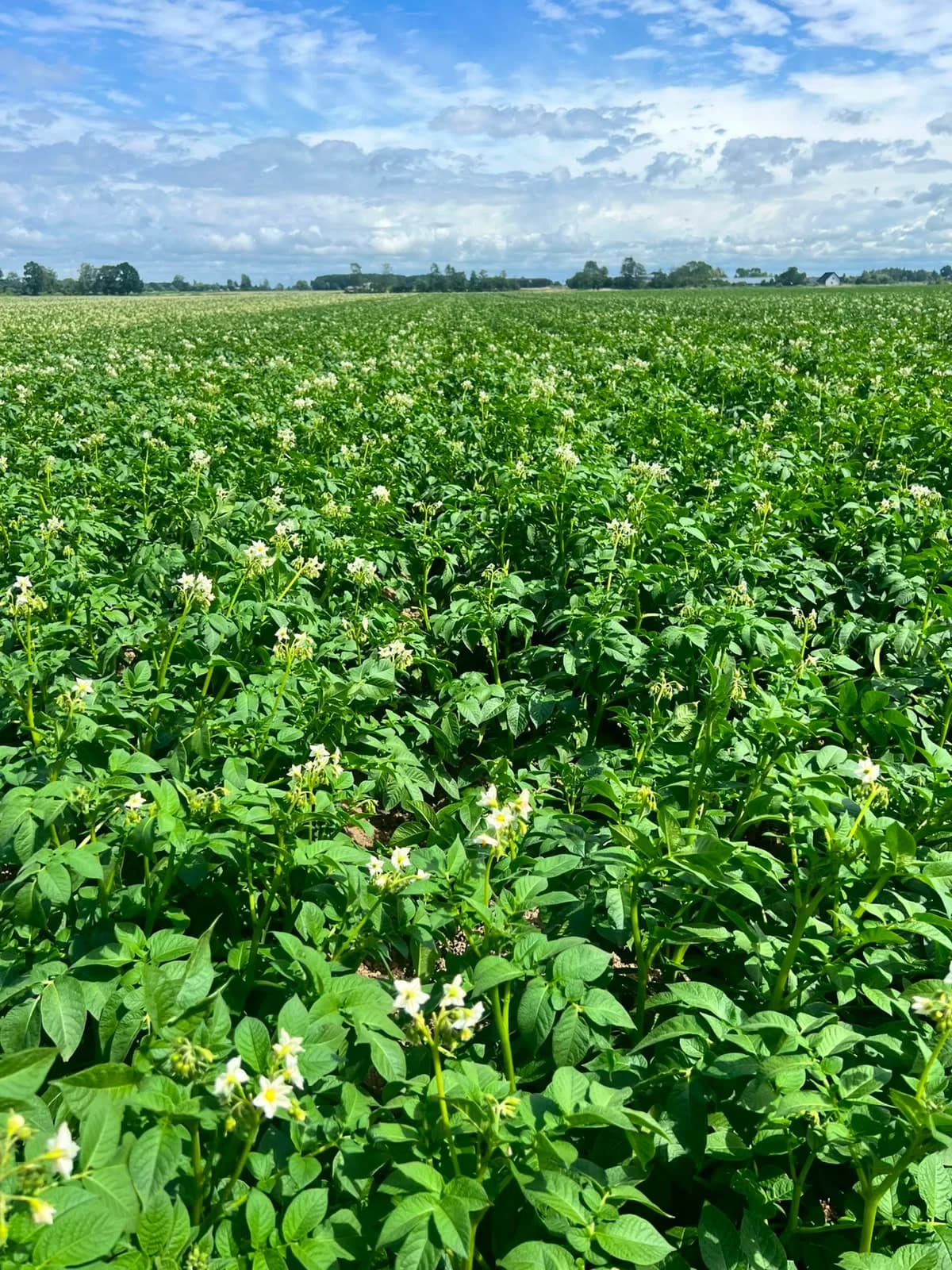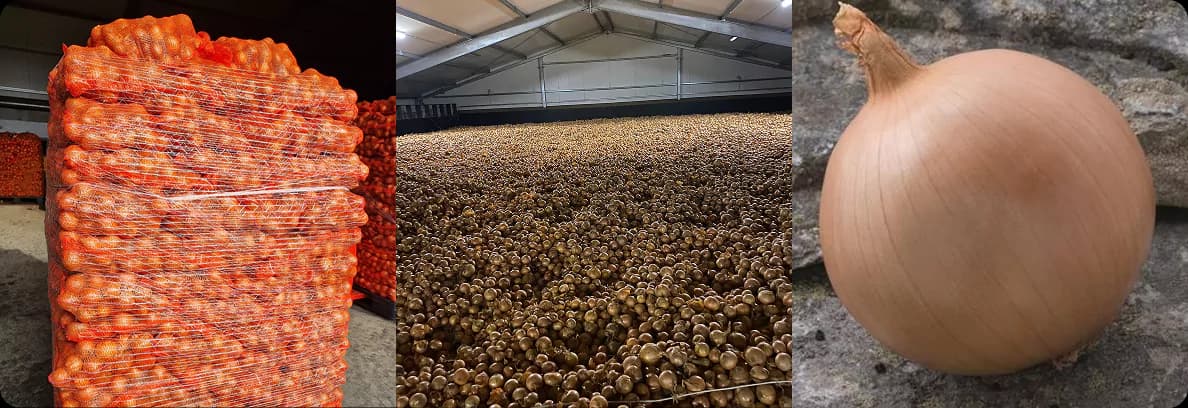
It is easy to read about what artificial intelligence in farming "could" do. On our farm AI is not an announcement, but two machines that work every day of the season: the Ecorobotix ARA spot sprayer in the field and the DOWNS CropVision optical sorter in the warehouse. In this post we show first-hand what algorithms really do on a farm of more than 800 hectares and what buyers of our vegetables get out of it.
Where AI really works on our farm
Artificial intelligence in farming today comes down to one mechanism: a camera looks, an algorithm recognises, a machine reacts in a fraction of a second. On our farm this mechanism works at the two most sensitive points of production.
| Machine | What the AI recognises | Result |
|---|---|---|
| Ecorobotix ARA | weed versus crop plant, in real time | spraying only where a weed grows, approx. 70% less chemicals |
| DOWNS CropVision | defects, stones and clods on every single piece, 360-degree scan | a clean, uniform batch, throughput up to 100 t/h |
The first machine makes sure chemicals do not land where they do not have to. The second makes sure nothing leaves for the buyer that should not. Between them there is also precision farming, covered below, because it is worth honestly separating it from AI.
Ecorobotix ARA: an algorithm decides on every nozzle
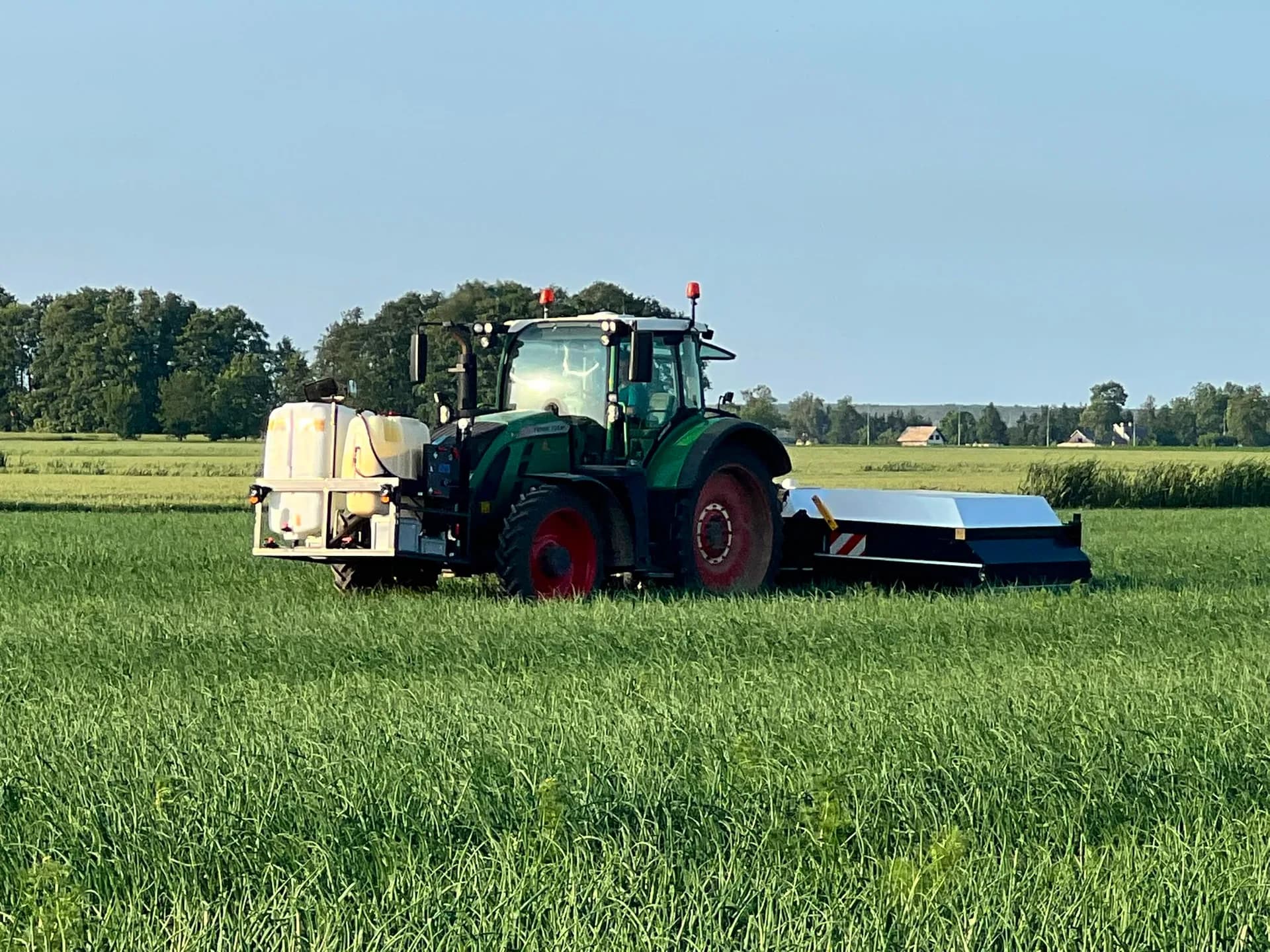
Our Ecorobotix ARA spot sprayer is, to the best of our knowledge, one of only three such machines in Poland. On its six-metre boom it carries cameras and 156 nozzles working in a 6 by 6 centimetre grid. The cameras photograph the field continuously, the algorithm recognises what is an onion and what is a weed, and it opens only those nozzles under which a weed is actually growing.
A conventional sprayer wets the whole field, ARA sprays points. In practice this cuts chemical rates by around 70 percent (the manufacturer claims up to 95 in favourable conditions). With spot spraying, the liquid targets the weed, not the crop. For onions, which keep the soil profile exposed all season and are poor at defending themselves against weeds, this changes the economics and cleanliness of the whole crop.
DOWNS CropVision: AI inspects every single piece
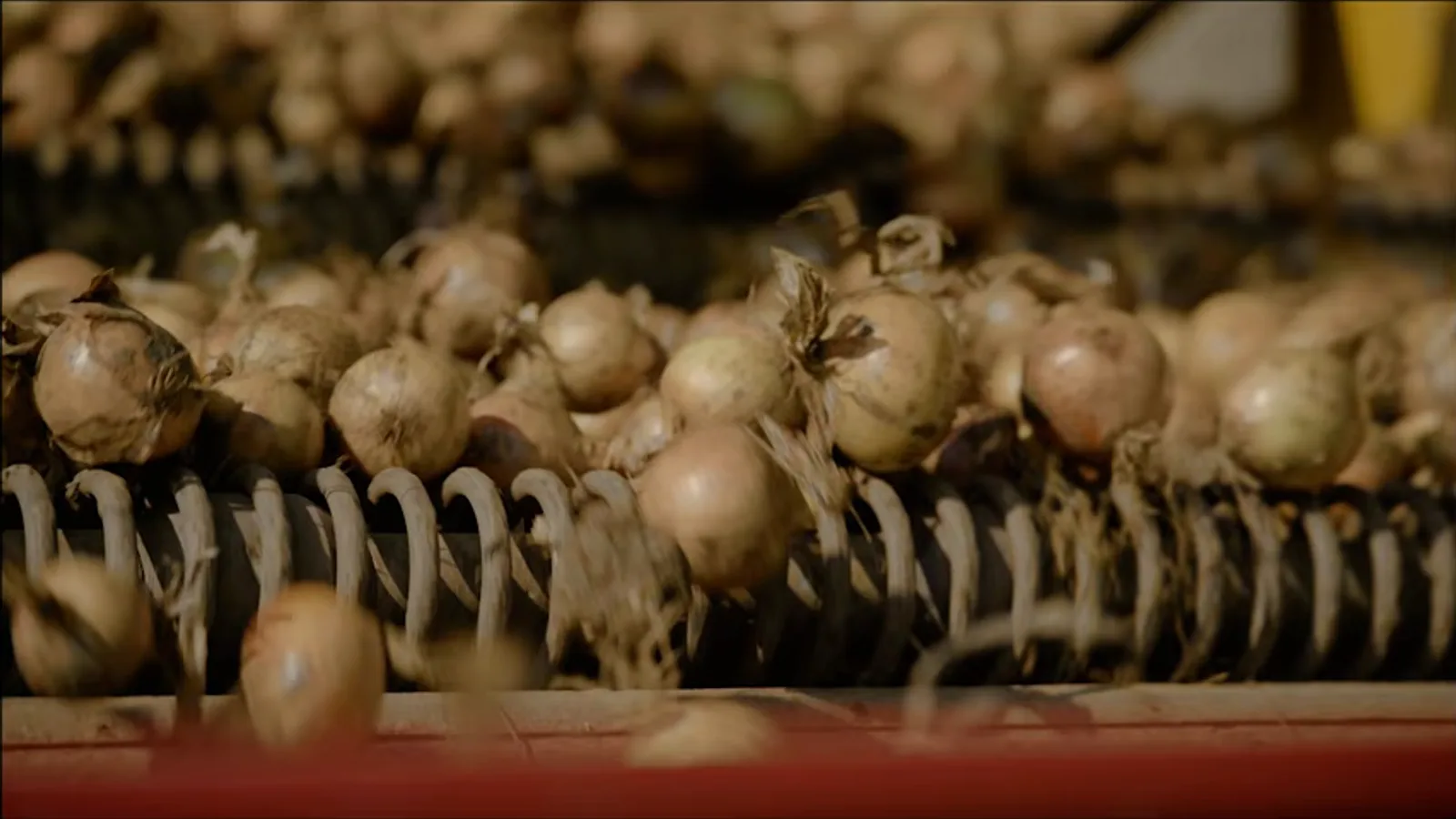
The second algorithm works under a roof. The DOWNS CropVision optical sorter scans every onion, potato and beetroot in 360 degrees, and a model trained on thousands of images recognises rots, damage, stones and clods of soil. A defective piece drops off the line automatically, at a throughput of up to 100 tonnes per hour.
A person at the belt sees as much as they manage to see. The camera sees every piece from every side, at the same pace through the whole shift. For the buyer this means uniform, clean batches regardless of whether we sorted them in the morning or at three at night at the peak of the season.
Precision farming is not the same as AI
For the record: not everything modern is artificial intelligence. RTK GPS accurate to the centimetre, John Deere Auto Pilot parallel guidance or variable rate fertilising are automation and precise measurement, not machine learning. On our farm one supports the other: precise sowing in perfectly even rows later makes it easier for ARA's cameras to tell an onion from a weed, because the algorithm knows where the crop plant is allowed to grow.
This whole set, from guidance to the sorter, is part of our fleet of 87 machines. AI is still a minority within it, but one working in the places where the human eye and hand are the weakest link.
Our rule with new technology is simple: a machine has to improve the produce or cut input use, ideally both. ARA and CropVision do both at once, which is why they are here to stay.
What buyers of our vegetables get out of it
The effects of AI show up not in presentations but in the produce. Less chemistry in the field supports our production technology with no pesticide residues, in line with the principles of Integrated Plant Production, which we confirm with residue testing of every batch. Optical sorting, in turn, means that the batch at the buyer's looks the same as the sample it was ordered from.
If you want to buy vegetables from a farm that invests in technology so the produce is cleaner and more uniform, write to us via the contact page. We will gladly show you how these machines work live.
Want to see the other machines we work with every day? Have a look at our machinery fleet or write to us if you are planning deliveries of vegetables grown with less chemistry.